
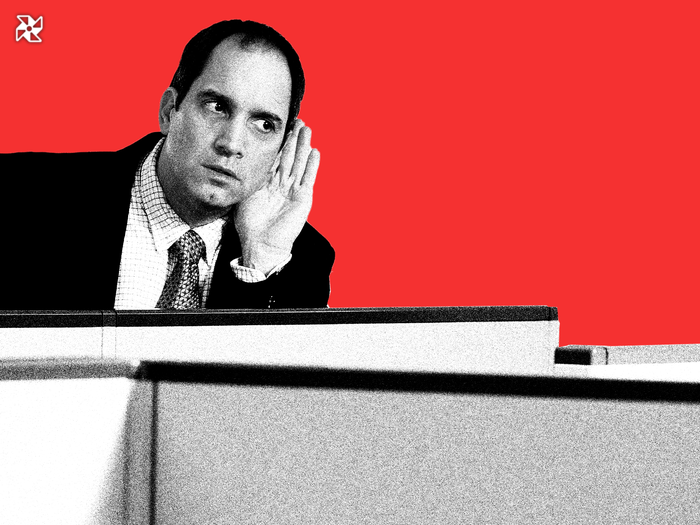
When Amber Smith, 28, had trouble submitting an IT support ticket, she quickly realized that her second layoff in one year had arrived.
Even before her second layoff in a year, Amber Smith, 28, felt a growing sense of workplace anxiety. Simple tasks—a sudden phone call from her manager or an unexpected meeting—became sources of intense stress, highlighting the pervasive insecurity many employees now face
Layoff anxiety is gripping the modern workplace. While overall layoff numbers remain historically low, the pervasive fear of job loss is impacting employee morale and productivity. This insecurity, fueled by headlines, stricter work environments, and the rise of AI, is leading to increased stress and a sense of disempowerment among workers. Learn how this "paranoid attribution" affects performance and what it means for the future of work
White-collar workers face mounting workplace stress: AI job displacement fears, forced return-to-office mandates, and a demanding "hardcore" culture are eroding work-life balance. The shrinking middle management and "Great Flattening" organizational structures fuel anxiety and job insecurity, leaving many fearing layoffs
“Workers are feeling disempowered,” Michele Williams, a professor of management and entrepreneurship at the University of Iowa, said, adding that this trend reared its head during the 2008 recession and is now back again.
“If the boss walks by and doesn’t say ‘hi,’ are they planning to fire me, as opposed to the boss was just busy that day and just didn’t notice you?” Williams said. “They’re looking for these social cues and overinterpreting social cues because of that insecurity.”
Job insecurity fuels "paranoid attribution," causing employees to interpret everyday workplace events negatively. Is a lukewarm office a cost-cutting measure? Do fewer snacks signal financial trouble? Are new interns a positive or negative hiring indicator? This over-interpretation of social cues reflects widespread employee anxiety in today's volatile job market, impacting productivity and morale
Job insecurity is impacting employee performance. While overall layoffs remain low, white-collar workers, particularly in large companies, experience heightened anxiety. Increased competition for white-collar jobs and slower promotions fuel this fear, leading to overanalyzing workplace events and impacting productivity. This "paranoid attribution" stems from a shift in workplace power dynamics and contributes to a stressful work environment
The paranoia over employment uncertainty pushed Smith out of the corporate world completely. These days, she’s self-employed as a content creator and reseller. “I feel so much better because being self-employed, obviously, I’m not going to get laid off,” Smith said.
Monica Wiant, a 47-year-old copywriter in Minnesota, has completely changed her perspective on work and her career after getting laid off twice in two years. The first time she was laid off was the day that she had arranged a return-to-office party for the workers reporting to her. She was also coming off a glowing performance review in her role as a VP.
Layoff anxiety is hitting workers hard. One employee described receiving the news as "the worst surprise party ever," preceded by shrinking budgets, reduced advertising, and hiring freezes – all common warning signs of impending job cuts. This reflects a broader trend of worker insecurity fueled by layoffs, AI fears, and a demanding work environment. Employees are hyper-focused on interpreting even minor workplace occurrences as potential indicators of job loss, a phenomenon experts call "paranoid attribution
“I feel like so many companies have lost sight of how important the human experiences of their employees are. There’s no place that’s less motivating than a downsizing workplace,” Wiant said. “It’s really hard to go to work every day and to know that you may not have a future here no matter how hard you work.”
Experienced layoff? Feeling workplace paranoia amid layoffs, AI anxieties, or RTO pressures? Share your story with our reporter: jkaplan@businessinsider.com
Veteran supply chain executive Mark Freeman (65) shares hard-won wisdom after navigating two career layoffs and 25+ years in the industry. His insights offer valuable perspective on surviving job insecurity and thriving in today's volatile job market
Job security jitters? Don't wait for the axe to fall. Expert advice: proactively update your resume and network. Even reassurances of job safety shouldn't lull you into complacency; a robust job search strategy is crucial in today's volatile market. Stay agile, stay ahead
Attention on layoffs, as Business Insider’s Tim Paradis writes, might bite into productivity amid worker unease. Williams said that workers become less engaged as their energy shifts from actually getting work done toward worrying and becoming hypervigilant.
Conversely, the rise of "hardcore" management, fueled by Big Tech's emphasis on performance reviews, may cause employees to cling to outdated ideas about job security, ironically increasing their vulnerability during layoffs
Job insecurity is rampant, leaving employees feeling powerless and anxious. Professor Michele Williams, a management and entrepreneurship expert, advises that increased effort can be beneficial when career advancement (promotions or raises) appears attainable. This strategy is particularly relevant in today's challenging job market, characterized by layoffs, AI anxieties, and a demanding work culture
Excessive workplace insecurity fosters knowledge hoarding among employees, hindering collaboration and innovation. This information siloing, a byproduct of fear and power imbalances, prevents organizations from maximizing teamwork and creativity. Open knowledge sharing is crucial for boosting company performance and fostering a positive work environment
Northwestern Kellogg professor Benjamin Friedrich explains that employees lacking trust in their employers are less likely to go the extra mile, highlighting the impact of broken trust on worker engagement and productivity
Despite recent layoffs and shifting workplace dynamics, worker power isn't entirely diminished. While the balance of power has shifted, some pandemic-era benefits, like improved employee amenities, remain
Despite recent layoff anxieties and a shifting workplace power dynamic, remote work prevalence remains remarkably stable, according to expert Friedrich. This stability contrasts with rising employee insecurity fueled by factors like AI job displacement fears and stricter return-to-office mandates
Facing two layoffs in quick succession, Wiant became more adept at recognizing the warning signs. While this experience was undeniably difficult, it also prompted significant self-reflection and resilience
Finding Purpose Beyond the Paycheck: Why Employees Are Seeking Fulfillment Outside of Work
Amidst widespread layoffs and workplace anxieties, many are re-evaluating their priorities. This shift reflects a growing need for purpose and creative/intellectual challenges, sourced from avenues beyond traditional employment. Employees are actively seeking fulfillment outside of work, recognizing that job security alone doesn't guarantee a sense of meaning
Experiencing workplace paranoia? Share your story about job insecurity, layoffs, and the anxieties of the modern workplace. Contact reporter Jake Kaplan at jkaplan@businessinsider.com
Source: Original Article