
US Strikes Iranian Nuclear Sites, Sparking Global Fears of Wider Conflict. The world reacts to a major escalation in the Israel-Iran conflict after a US attack on Iranian nuclear facilities, raising concerns about the future of nuclear proliferation and Tehran's response
US strikes on Iranian nuclear sites raise fears of global nuclear proliferation, jeopardizing international efforts to control nuclear weapons and sparking concerns of wider regional conflict
US Missile Strikes on Iranian Nuclear Sites Spark International Crisis: Tehran Vows Retaliation after "Red Line" Crossed
Following a U.S. missile strike on Iranian nuclear sites, President Masoud Pezeshkian vowed retaliation, stating, "The U.S. attacked us; what would you do? They must face consequences for their aggression." This statement, released via the president's website following a call with the French leader, underscores the escalating tensions and potential for further conflict in the Middle East
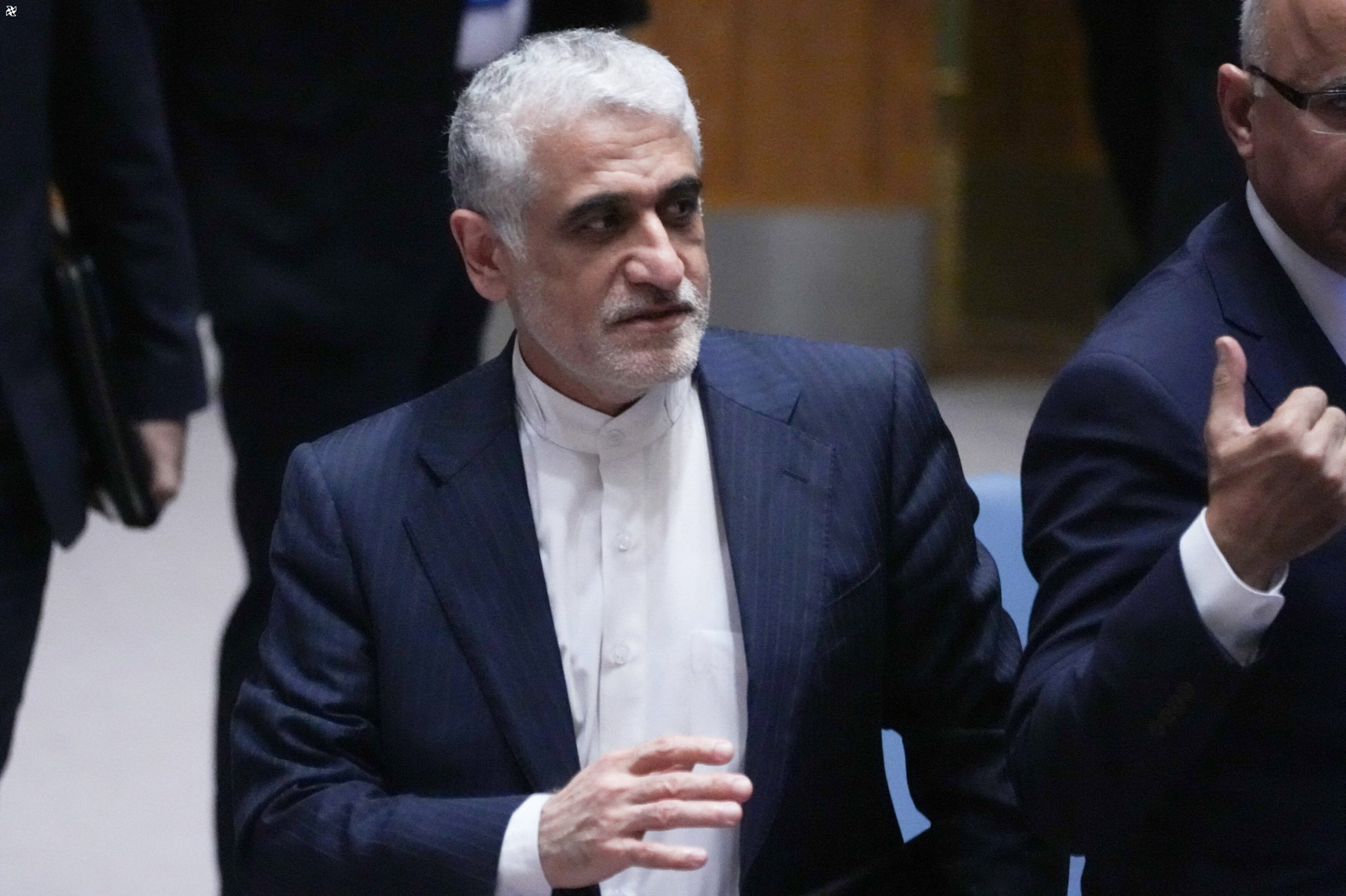
Iran's UN Ambassador Amir Saeid Iravani condemned the US attack on Iranian nuclear facilities, accusing the US of sabotaging diplomacy and vowing a proportionate military response. The timing, nature, and scale of this response will be determined by the Iranian military
US strikes on Iran spark regional conflict fears. Iran's Supreme Leader advisor, Ali Akbar Velayati, warns that any nation assisting the US in attacks will become a military target, according to IRNA
Amidst escalating US-Iran tensions following US strikes on Iranian nuclear sites, the Trump administration signaled a desire to resume diplomatic talks. Secretary of State Marco Rubio called for direct negotiations, while Defense Secretary Pete Hegseth emphasized that the US does not want war. This announcement follows Iran's vow of retaliation for the attacks, raising concerns of wider regional conflict and the future of nuclear non-proliferation
Following a US attack on Iranian nuclear sites, Tehran declared diplomacy over, asserting its right to self-defense. Iranian Foreign Minister Abbas Araghchi traveled to Moscow to strategize with Russia, a key ally, on a potential response
Trump's unauthorized missile strikes on Iranian nuclear sites sparked fears of wider Middle East conflict. With tens of thousands of US troops deployed in the region, the President warned of further action if Iran retaliated, escalating tensions and raising serious questions about the future of nuclear non-proliferation
Iran confirms attacks on Fordo, Natanz, and Isfahan nuclear sites following US strikes. No immediate radioactive contamination reported, according to Iran and the IAEA. The incident raises serious concerns about regional stability and the future of nuclear non-proliferation
Conflicting reports emerged following a U.S. attack on Iranian nuclear sites. While President Trump declared the facilities "completely and fully obliterated," the Pentagon reported "sustained, extremely severe damage and destruction," and Israeli assessments confirmed significant damage. The differing accounts raise questions about the extent of the damage inflicted on Iran's nuclear program and the potential for further escalation
Israel nears victory against Iranian nuclear and missile threats, says Prime Minister Netanyahu
IAEA Chief Grossi urges access to damaged Fordo nuclear site after US strikes. Following US attacks on Iranian nuclear facilities, including the deeply buried Fordo site, IAEA inspectors demand access to assess the damage. Visible craters raise concerns about the extent of the destruction. An emergency meeting of the IAEA Board of Governors is scheduled for Monday. Iran's response and the future of nuclear non-proliferation remain uncertain
While a diplomatic solution remains possible, failure could trigger catastrophic violence and destruction, potentially jeopardizing global nuclear non-proliferation efforts
US Strikes Iranian Nuclear Sites: High-Stakes Gamble in Middle East Conflict. A covert US attack on Iranian nuclear facilities risks escalating tensions and plunging the region into a wider war. Success could neutralize Iran's nuclear ambitions and bolster Israel's security, but failure could trigger a protracted and unpredictable conflict with devastating consequences
For Iran’s supreme leader, it could mark the end of a campaign to transform the Islamic Republic into a greater regional power that holds enriched nuclear material a step away from weapons-grade. Ayatollah Ali Khamenei last spoke publicly on Wednesday, warning the U.S. that strikes targeting the Islamic Republic will “result in irreparable damage for them.”
Iran, battered by Israel’s largest-ever assault on it that began on June 13, has limited options for retaliation, as key allies have mostly stayed out of the conflict. It could attack U.S. forces stationed in the Middle East with the missiles and rockets that Israel hasn’t destroyed. It could attempt to close a key bottleneck for global oil supplies, the Strait of Hormuz, between it and the United Arab Emirates.
Or it could hurry to develop a nuclear weapon with what remains of its program. The Atomic Energy Organization of Iran said its program will not be stopped.
Iran has long maintained that its nuclear program was peaceful, and U.S. intelligence agencies have assessed that Tehran is not actively pursuing a bomb. However, Trump and Israeli leaders have argued that Iran could quickly assemble a nuclear weapon.
Israel has significantly degraded Iran’s air defenses and offensive missile capabilities and damaged its nuclear enrichment facilities. But only the U.S. military has the bunker-buster bombs that officials believe offered the best chance of destroying sites deep underground. A total of 14 of the bombs were used on Natanz and Fordo, according to the Pentagon.
Experts scrambled to answer the urgent question: What has happened to Iran’s stockpile of uranium and centrifuges?
Satellite images taken by Planet Labs PBC after the U.S. strikes, analyzed by The Associated Press, show damage to the facility. They suggest Iran packed the entrance tunnels to Fordo with dirt and had trucks at the facility ahead of the strikes.
Several Iranian officials, including Atomic Energy Organization of Iran spokesman Behrouz Kamalvandi, have claimed Iran removed nuclear material from targeted sites.
Before the Israeli military campaign began, Iran said it had declared a third, unknown site as a new enrichment facility.
“Questions remain as to where Iran may be storing its already enriched stocks … as these will have almost certainly been moved to hardened and undisclosed locations, out of the way of potential Israeli or U.S. strikes,” said Darya Dolzikova, a senior research fellow at the Royal United Services Institute focused on nonproliferation issues.
Global leaders responded with shock and calls for restraint. Egypt warned of “grave repercussions” for the region. Bahrain, home to the U.S. Navy’s Middle East-based Fifth Fleet, called on Iran and the U.S. to “quickly resume talks.”
The decision to attack was a risky one for Trump, who won the White House partly on the promise of keeping America out of costly foreign conflicts.
But Trump also vowed that he would not allow Iran to obtain a nuclear weapon. He initially hoped that the threat of force would bring the country’s leaders to give up its nuclear program.
For Netanyahu, the strikes were the culmination of a decades-long campaign to get the U.S. to strike Israel’s chief regional rival and its disputed nuclear program. Netanyahu praised Trump, saying his decision “will change history.”
Israel is widely believed to be the only Middle Eastern country with nuclear weapons, but the country has never acknowledged it.
Israel’s military chief, Lt. Gen. Eyal Amir, called the U.S. attack a key “turning point” but added: “We still have targets to strike and objectives to complete.”
Iran’s paramilitary Revolutionary Guard said it launched a barrage of 40 missiles at Israel, including its Khorramshahr-4, which can carry multiple warheads. Israeli authorities said more than 80 people suffered mostly minor injuries.
Late Sunday, the Israeli military said it again struck military infrastructure sites in Tehran and western Iran. Earlier, explosions boomed in Bushehr, home to Iran’s only nuclear power plant, three semiofficial media outlets reported. Israel’s military said it struck missile launchers in Bushehr, Isfahan and Ahvaz, as well as a command center in the Yazd area where it said Khorramshahr missiles were stored.
Israeli strikes on Iran have killed at least 865 people and wounded 3,396 others, according to the Washington-based group Human Rights Activists. The group said of those dead, it identified 363 civilians and 215 security force personnel. In Israel, at least 24 people have been killed and over 1,000 wounded.
At Turkey’s border with Iran, one departing Iranian defended his country’s nuclear program.
“We were minding our own business,” Behnam Puran said.
___
Associated Press writers Nasser Karimi, Mehdi Fattahi and Amir Vahdat in Iran; Aamer Madhani in Morristown, New Jersey; Julia Frankel in Jerusalem; Melanie Lidman in Tel Aviv; Lolita Baldor in Narragansett, Rhode Island; Samy Magdy in Cairo; Rusen Takva in Van, Turkey; Joah Boak in Washington; Edith M. Lederer at the United Nations and Suzan Fraser in Ankara, Turkey, contributed to this story.
Source: Original Article