
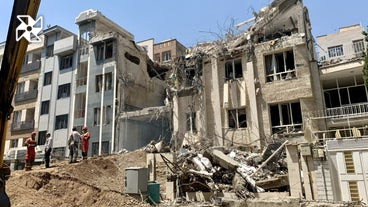
US Support Fuels Israel's Intensifying Conflict with Iran: Analysis of the escalating war between Israel and Iran reveals a critical dependence on US military aid and diplomatic backing. The US-Israel alliance, including the Iron Dome defense system and US naval deployments, enables Israel's offensive actions while mitigating Iranian retaliation. This dangerous escalation risks wider Middle East conflict and echoes past US interventions, raising concerns about a new era of instability under the Trump administration and Netanyahu's leadership. Experts warn of potential regional expansion and growing fears among Gulf nations
Israel's war with Iran: US support fuels escalating conflict. Tel Aviv's attacks rely on continued US weapons resupply. The Iron Dome, funded by the US, and American forces counter Iranian retaliation, while US naval deployments and diplomatic support bolster Israel. This intensifying conflict, mirroring past US Middle East involvement, risks a prolonged and unpredictable war, impacting global stability
US Foreign Policy Fuels Escalating Iran-Israel Conflict: Echoes of Past Middle East Instability. With Iran retaliating and the risk of wider war increasing, the conflict's worsening trajectory is inextricably linked to American support for Israel. This echoes past US intervention in the Middle East, resulting in devastating consequences both regionally and domestically. The potential for a prolonged and unpredictable war, driven by Netanyahu and enabled by Trump's foreign policy, poses a grave threat to regional stability
Trump, Netanyahu, and the Looming Iran War: A dangerous escalation of the Israeli-Iranian conflict fueled by US support risks a new era of unpredictable global war. Netanyahu's history of using foreign conflict to bolster domestic power, coupled with his longstanding desire for a full-scale war against Iran, creates a volatile situation. Iran's regional strength and opposition to Israel heighten the risk of catastrophic bloodshed and far-reaching international consequences. The US, through arms supplies and military support, is enabling this dangerous trajectory, echoing past Middle Eastern interventions that have led to devastating instability
Israel's escalating conflict with Iran, fueled by US support, sparks regional fears. A US official reveals concerns that Israel may target other influential Middle Eastern nations, with Gulf states fearing they're next. This escalating tension highlights the dangerous implications of US foreign policy in the region and the potential for wider conflict
Trump's Middle East policy: influenced by lobbying and last conversations, fueling Israeli aggression against Iran. Gulf leaders, fearing Israeli expansionism, privately urge Trump to curb Netanyahu's actions, but his decisions appear swayed by recent influencers, jeopardizing regional stability and echoing past US mistakes
Trump's conflicting statements on the Israel-Iran conflict raise serious concerns. His weekend pronouncements advocating negotiated settlements contrast sharply with Sunday's suggestion of direct U.S. involvement in destroying Iranian nuclear facilities. This unpredictable stance, coupled with unwavering U.S. support for Israel's aggressive actions, fuels fears of escalating Middle East tensions and a new era of instability driven by Netanyahu's domestic political agenda. The risk of wider conflict and a prolonged war, fueled by U.S. foreign policy and military support, is dangerously high
US Involvement in Israel-Iran Conflict: Growing Concerns Over Unilateral Actions and Regional Instability. Anonymous sources reveal Washington's tacit support for Israel's escalating war with Iran, fueling fears of a wider conflict and jeopardizing US foreign policy goals. Experts warn of potential blowback and strained alliances due to the lack of a clear strategic objective, echoing past US interventions in the Middle East. While a nuclear limitation agreement with Iran remains a potential outcome, the current trajectory risks escalating tensions and regional instability, potentially involving other Gulf nations. The Trump administration's actions are raising concerns about a new era of unpredictable warfare driven by Israeli and US interests
Israel's escalating war against Iran: A pointless conflict fueled by US support? A US official questions the strategic value of Israel's actions, citing increased, not decreased, insecurity. This intensified conflict, enabled by American weapons resupply and military support, risks wider regional war and echoes past US Middle East interventions. The danger of perpetual conflict, driven by Netanyahu's domestic political goals and Trump's foreign policy, is growing, jeopardizing regional stability and global peace
Growing concerns exist that Israel's escalating war on Iran, fueled by unwavering US support, mirrors the disastrous 2003 Iraq invasion. This escalating conflict, enabled by American military aid, missile defense systems (like Iron Dome), and naval deployments, risks a new era of Middle East instability reminiscent of past US foreign policy failures. The parallels to previous controversial interventions are raising alarms, highlighting the potential for a wider regional conflict and echoing criticisms of past US actions in the region
Amidst Israel's intensified offensive against Iran, Netanyahu and Bennett publicly voiced support for regime change in Tehran. Netanyahu's video message promised to clear a path for Iranian freedom, while Bennett echoed this sentiment on X. This aggressive stance, enabled by significant U.S. military and financial support, raises concerns about escalating regional conflict and the potential for further instability in the Middle East. The U.S. role in fueling this conflict, including resupplying Israel's weapons and deploying naval assets, is a key factor driving the crisis
Israel stands with you. The free world stands with you. Seize this moment for freedom. This urgent message echoes amidst escalating conflict in the Middle East, highlighting the crucial role of US support in Israel's actions against Iran. Don't miss this opportunity to fight for your liberty
US support fuels Israel's intensified war on Iran, raising fears of regime change. Rep. Cory Mills' assertion of imminent Iranian regime change echoes concerns about escalating conflict and the potential for a new era of Middle East instability driven by US-Israel alliance. This dangerous trajectory risks wider regional conflict and underscores the need for a peace strategy
Senator John Fetterman's staunch pro-Israel stance and opposition to Iran diplomacy fueled his X appeal urging support for Israel's efforts to counter Iran's nuclear program. This mirrors the hawkish views of experts like Mark Dubowitz, who believe military action will ultimately lead to a less hostile Iran. However, this escalating conflict, inextricably linked to US foreign policy and military support for Israel, risks wider regional instability and echoes past US interventions in the Middle East. The potential for a protracted war, fueled by Netanyahu's domestic political calculations and enabled by US backing, raises serious concerns about the future of the region
Israel's escalating conflict with Iran: A US-backed campaign raising concerns of regime change. A former senior Biden administration official's comments fuel debate on US support for Israeli actions, including weapon resupply and deployment of the Iron Dome defense system. This intensifying conflict, fueled by US foreign policy and echoing past Middle Eastern interventions, risks broader regional instability and unpredictable warfare under the Trump-Netanyahu alliance. Growing fears of further Israeli aggression against regional powers highlight the dangerous implications of this escalating situation
The narrative should be taken with a large grain of salt, however. The idea that communities will see foreigners attacking them as liberators has been disproven repeatedly ― and the reverse is common, where outside assaults fuel a rally-around-the-flag effect even around unpopular local leaders. Experts see chances of that effect as especially strong in Iran, where many have deep wariness of foreign meddling and are shaped by the memory of a vicious yearslong war in the 1980s following an invasion by Iraq (supported by the U.S.).
While Iranians have in recent years intensely challenged their repressive rulers, the rising civilian toll of the Israeli offensive, the fear of turmoil in their country and distaste for Netanyahu given his policies elsewhere, like pummeling Palestinians in the Gaza Strip, make a popular embrace of the war unlikely. Speaking to the Financial Times, an Iranian activist condemned the Israeli leader’s use of the Iranian protest slogan “Woman, Life, Freedom.”
“That slogan coming out of the mouth of a criminal like him for his personal and political gain destroys its meaning,” Nastaran said. (The outlet did not provide her surname, likely for security reasons.)
Policy-makers’ blindness to nuance in the Middle East may be driving overly rosy thinking. Mills compared the situation in Iran to the fall of Syrian dictator Bashar Assad last December, but the two contexts are very different. Assad, an Iranian ally who oversaw the slaughter of tens of thousands of his own people, faced stiffer local opposition, including among his own support base, and his regime had by 2024 been battered by 13 years of civil war.
To a large degree, the Biden administration’s doubling down on traditional and dubious U.S. foreign policy logic made the current escalation under Trump possible.
President Joe Biden could have reduced tensions around Iran’s nuclear program by fulfilling his campaign pledge to restore the Obama-era international deal limiting Iranian nuclear development in exchange for lifting sanctions on the country. (Trump tore up the deal during his last presidency.)
In that scenario, it’s unlikely Iran’s nuclear development would have grown in recent years ― the reason that Israel has cited for its current attack.
Instead, Biden-era officials were fearful of being portrayed as weak on Iran, which made them cautious in attempting diplomacy with Tehran, and reluctant to ease sanctions which Trump had imposed on the country.
“They tried to capitalize on Trump’s maximum pressure that they had all condemned when they were out of power in order to extract more concessions from the Iranians,” said Ali Vaez, an analyst at the International Crisis Group think tank. “The Biden administration’s ambition for a longer and stronger deal resulted in no deal.”
Meanwhile, experts say the Biden administration courted disaster through its nearly-unchecked support for Netanyahu following the Oct. 7, 2023, attack on Israel by the Palestinian militant group Hamas.
Netanyahu’s campaign against Hamas in the Gaza Strip and then the Hamas ally Hezbollah in Lebanon faced thousands of allegations of war crimes and other violations of international law, while sparking unexpected new battles like an ongoing tit-for-tat between Israel and the Houthi militia in Yemen, which badly damaged global trade. Yet Biden refused to pressure Netanyahu by putting U.S. support for Israel in question ― even as dozens of lawmakers and human rights groups urged him to, saying Israel was breaking U.S. law in its use of American weapons.
The Biden administration “consolidated Israeli impunity in the sense that they basically set a precedent for Israel targeting civilians and being able to get away with it,” Vaez said.
Israeli tactics in the Iran war are beginning to resemble moves in Gaza and Lebanon, like orders by the Israel Defense Forces (IDF) for civilians to abandon certain areas with no specifics on when they can return. Sometimes cast as evidence of Israel’s regard for civilians, such orders have repeatedly failed to prevent massacres.
Defenders of Biden’s record say the president astutely helped Israel weaken enemies across the region, and appear to see Israel’s current Trump-backed offensive as a continuation of his policies. Brett McGurk, Biden’s deeply controversial chief adviser on the Middle East, has in recent days used his position as a CNN commentator to praise Israel’s strikes as “extraordinary.” (McGurk also helped shape the U.S.’ ill-fated post-invasion policies in Iraq, which drove the rise of the so-called Islamic State, or ISIS.)
Meanwhile, the chief U.S. military commander for the Middle East, Michael Kurilla, coordinated heavy U.S. support for Israel under Biden, and has under Trump advocated internally for supporting Israeli attacks on Iran, with Israeli and American officials supportive of the idea becoming determined to launch such attacks before Kurilla’s leaves his post later this year. Amid the current internal debate in the Trump administration, Kurilla is seeking greater U.S. resources to aid the Israelis.
With Trump largely following Biden’s pattern in handling Netanyahu so far, observers who say that is unwise hope the president will eventually change course.
“There is a wide understanding ― including among people who supported Israel post-Oct. 7 ― that we created a massive moral hazard… by giving blanket support for defending Israel no matter what it did,” the U.S. official said, referring to a situation in which one actor takes bigger risks because they know another actor will pay the price.
For two decades, HuffPost has been fearless, unflinching, and relentless in pursuit of the truth. to keep us around for the next 20 — we can’t do this without you.
We remain committed to providing you with the unflinching, fact-based journalism everyone deserves.
Thank you again for your support along the way. We’re truly grateful for readers like you! Your initial support helped get us here and bolstered our newsroom, which kept us strong during uncertain times. Now as we continue, we need your help more than ever. .
We remain committed to providing you with the unflinching, fact-based journalism everyone deserves.
Thank you again for your support along the way. We’re truly grateful for readers like you! Your initial support helped get us here and bolstered our newsroom, which kept us strong during uncertain times. Now as we continue, we need your help more than ever. .
Already contributed? Log in to hide these messages.
For two decades, HuffPost has been fearless, unflinching, and relentless in pursuit of the truth. to keep us around for the next 20 — we can’t do this without you.
Already contributed? Log in to hide these messages.
Biden, the official said, set “the precedent that this is what the U.S. does.”
Source: Original Article