
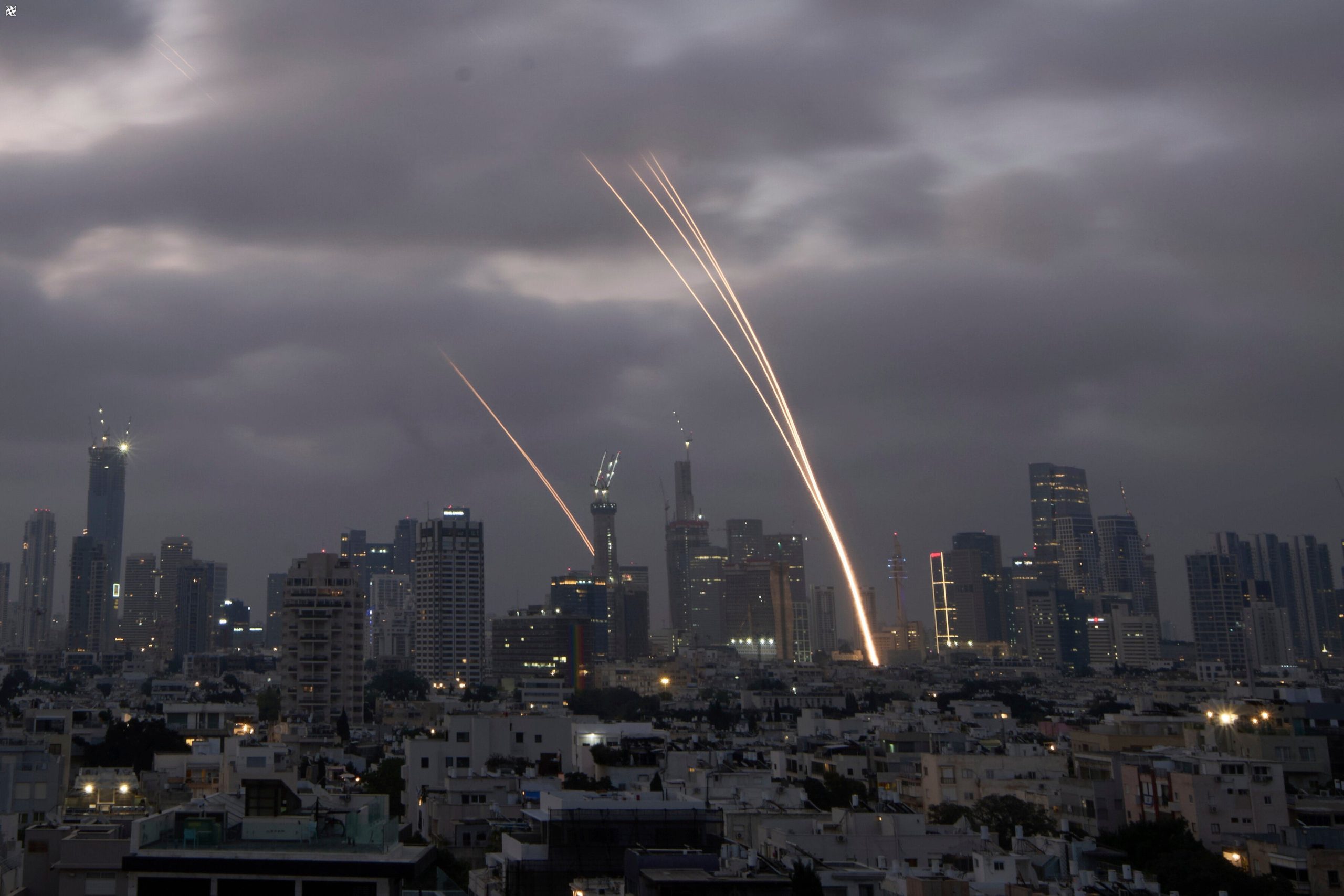
Iran-Israel Conflict Halts US-Iran Nuclear Talks: Oman confirms the postponement of Sunday's nuclear talks following a series of Israeli strikes on Iranian nuclear and military sites and subsequent Iranian retaliation. Tensions escalate in the Middle East as both nations threaten further attacks, jeopardizing diplomatic efforts to curb Iran's nuclear program
Iranian natural gas plant hit by Israeli drone strike: A "strong explosion" rocked an Iranian natural gas processing plant in the South Pars field, reportedly caused by an Israeli drone. This marks a potential first-ever Israeli attack on Iran's oil and gas infrastructure, producing LNG and other products. The extent of the damage remains unclear, while Israel has yet to comment. This escalation follows recent Israeli attacks on Iranian nuclear and military sites and fuels regional tensions
Following intense Israeli strikes on Iranian nuclear and military sites, Iran faces a critical juncture. Tehran's leadership must choose between escalating conflict with Israel or pursuing a diplomatic solution to de-escalate tensions in the volatile Middle East. The recent attacks have jeopardized ongoing US-Iran nuclear talks, highlighting the urgent need for regional stability
Israel's attacks on Iran halt US-Iran nuclear talks, indefinitely postponing Sunday's discussions. Oman, mediating the negotiations, confirms the delay but emphasizes that diplomacy and dialogue remain crucial for lasting peace in the Middle East. The escalating conflict between Israel and Iran raises concerns of wider war
Israel-Iran Conflict Escalates: Urgent Calls for De-escalation Amidst Renewed Attacks. Following a major Israeli offensive targeting Iranian nuclear and military sites, both nations threaten further action, jeopardizing regional stability. World leaders urge de-escalation to prevent all-out war, as Israel intensifies efforts to eliminate Hamas in Gaza after a 20-month conflict
Amidst escalating tensions, Israel launched hundreds of strikes on Iranian nuclear and military sites, claiming to have killed nine senior Iranian nuclear scientists. Iran, however, reported significantly higher casualties, citing 78 deaths and over 320 wounded. This dramatic escalation follows reports of Israeli attacks on Iranian oil and gas infrastructure, further jeopardizing already fragile US-Iran nuclear talks. The conflict raises concerns of a wider Middle East war
Following Israel's extensive strikes on Iranian nuclear and military sites, Iran launched a retaliatory barrage of drones and ballistic missiles targeting Jerusalem and Tel Aviv. Explosions rocked Israeli cities, prompting hours-long shelter-in-place orders for civilians already on edge from the ongoing Gaza conflict. The attacks resulted in three confirmed deaths and dozens of injuries
Israel warns Iran of severe consequences for attacks on Israeli citizens. Defense Minister Katz issued a stark warning: continued Iranian missile attacks on Israel will result in devastating repercussions for Tehran. This follows recent Israeli strikes on Iranian nuclear and military sites and escalating tensions in the Middle East
Amid escalating tensions, Israeli Prime Minister Benjamin Netanyahu vowed to eliminate Iranian threats to Israel while also calling for Iranian citizens to oppose their government. This statement follows a series of Israeli airstrikes targeting Iranian nuclear and military facilities, prompting retaliatory attacks from Iran and raising concerns of wider conflict in the Middle East. The recent attacks have jeopardized ongoing US-mediated nuclear talks between Iran and the West
Israel-Iran Conflict: Urgent Call for De-escalation Amidst Renewed Attacks. Missile strikes and bombings target nuclear sites and major cities, jeopardizing peace talks and escalating regional tensions. Diplomacy, not war, is the only path forward
Iran nuclear talks cancelled after Israeli strikes: Oman announced the postponement of US-Iran indirect negotiations following recent Israeli attacks on Iranian nuclear and military sites. Tensions escalate in the Middle East as both nations threaten further action
Iranian Foreign Minister Abbas Araghchi's comments to EU High Representative Josep Borrell follow escalating tensions between Israel and Iran, impacting ongoing US-Iran nuclear talks
Iran accuses the U.S. of supporting recent Israeli airstrikes on Iranian nuclear and military sites, a claim the U.S. denies. This escalation follows a series of attacks, including an Israeli drone strike on an Iranian natural gas plant, and has led to the postponement of U.S.-Iran nuclear talks. The ongoing conflict raises concerns of a wider regional war
Following Israel's attacks on Iranian nuclear sites and a subsequent Iranian retaliation, U.S.-Iran nuclear talks, mediated by Oman, are postponed. President Trump urged Iran to negotiate a nuclear deal, warning that further Israeli action is likely unless a deal is reached. The White House has yet to respond to recent Iranian statements. This escalating conflict raises concerns of wider Middle East war
Iran Vows Retaliation Against Israel After Attacks: Khamenei's Warning
Iran launched waves of missiles at Israel late Friday and early Saturday, and Iranians awoke to state television airing repeated clips of strikes on Israel, as well as videos of people cheering and handing out sweets.
The Iranian attacks killed at least three people and wounded 76, mostly in and around Tel Aviv, according to two local hospitals. One missile severely damaged at least four homes in the nearby city of Rishon Lezion, according to first responders.
The Israeli military said seven soldiers were lightly wounded when a missile hit central Israel, without specifying where. It was the first report of Israeli military casualties since the initial Israeli strikes.
U.S. ground-based air defense systems in the region were helping to shoot down Iranian missiles, said a U.S. official who spoke on condition of anonymity to discuss the measures.
In Ramat Gan, east of Tel Aviv, an Associated Press journalist saw burned-out cars and at least three damaged houses, including one whose front was nearly entirely torn away.
Residents of a central Israeli city that was hit Friday night told the AP the explosion was so powerful it shook their shelter door open. “We thought, that’s it, the house is gone, and in fact half of the house was gone,” said Moshe Shani.
Israeli police said debris from the interception of drones and missiles fell in dozens of locations in northern Israel, causing damage and fires but no injuries.
Israel’s main international airport said Saturday it will remain closed until further notice.
Iranian state television reported online that air defenses were firing in the cities of Khorramabad, Kermanshah and Tabriz. Footage from Tabriz showed black smoke rising from the city.
An Israeli military official said Saturday that the military was poised to carry out more strikes in Iran, saying, “This is not over.” He spoke on condition of anonymity in line with official procedures.
Israel’s army spokesman, Brig. Gen. Effie Defrin, said Israel had attacked more than 400 targets across Iran, including 40 in Tehran, where dozens of fighter jets were “operating freely.” He said it was the deepest point Israel’s air force had operated.
Defrin said fighter jets struck over 40 “missile-related targets and advanced air defense array systems” across Iran.
Overnight, the sound of explosions and Iranian air defense systems firing at targets echoed across central Tehran. Iran’s semiofficial Tasnim news agency reported a fire at Tehran’s Mehrabad International Airport.
Countries in the region condemned Israel’s attack, while leaders around the globe called for immediate deescalation from both sides.
Among the key sites Israel attacked was Iran’s main nuclear enrichment facility in Natanz. Satellite photos analyzed by AP show extensive damage there. The images shot Saturday by Planet Labs PBC show multiple buildings damaged or destroyed. The structures hit include buildings identified by experts as supplying power to the facility.
U.N. nuclear chief Rafael Grossi told the Security Council that the above-ground section of the Natanz facility was destroyed. The main centrifuge facility underground did not appear to have been hit, but the loss of power could have damaged the infrastructure there, he said.
Israel said it also struck a nuclear research facility in Isfahan, including “infrastructure for enriched uranium conversion,” and said it destroyed dozens of radar installations and surface-to-air missile launchers in western Iran. Iran confirmed the strike at Isfahan.
The Israeli military official said that according to the army’s initial assessment “it will take much more than a few weeks” for Iran to repair the damage to the Natanz and Isfahan nuclear sites. The official said the army had “concrete intelligence that production in Isfahan was for military purposes.”
Israel denied it had struck the nuclear enrichment facility in Fordo, about 100 kilometers (60 miles) southeast of Tehran, after an Iranian news outlet close to the government reported the sound of explosions nearby,
Netanyahu said the attack had been months in the making and was planned for April before being postponed.
Among those killed were three of Iran’s top military leaders: one who oversaw the entire armed forces, Gen. Mohammad Bagheri; one who led the paramilitary Revolutionary Guard, Gen. Hossein Salami; and the head of the Guard’s aerospace division, which oversees its arsenal of ballistic missile program, Gen. Amir Ali Hajizadeh.
For two decades, HuffPost has been fearless, unflinching, and relentless in pursuit of the truth. to keep us around for the next 20 — we can’t do this without you.
We remain committed to providing you with the unflinching, fact-based journalism everyone deserves.
Thank you again for your support along the way. We’re truly grateful for readers like you! Your initial support helped get us here and bolstered our newsroom, which kept us strong during uncertain times. Now as we continue, we need your help more than ever. .
We remain committed to providing you with the unflinching, fact-based journalism everyone deserves.
Thank you again for your support along the way. We’re truly grateful for readers like you! Your initial support helped get us here and bolstered our newsroom, which kept us strong during uncertain times. Now as we continue, we need your help more than ever. .
Already contributed? Log in to hide these messages.
For two decades, HuffPost has been fearless, unflinching, and relentless in pursuit of the truth. to keep us around for the next 20 — we can’t do this without you.
Already contributed? Log in to hide these messages.
Two of Bagheri’s deputies were also killed, Iran confirmed Saturday. On Saturday, Khamenei named a new leader for the Revolutionary Guard’s aerospace division: Gen. Majid Mousavi.
___
Lidman and Frankel reported from Jerusalem. Associated Press writers Natalie Melzer in Nahariya, Israel, and Nasser Karimi in Tehran, Iran, contributed to this report.
Source: Original Article