
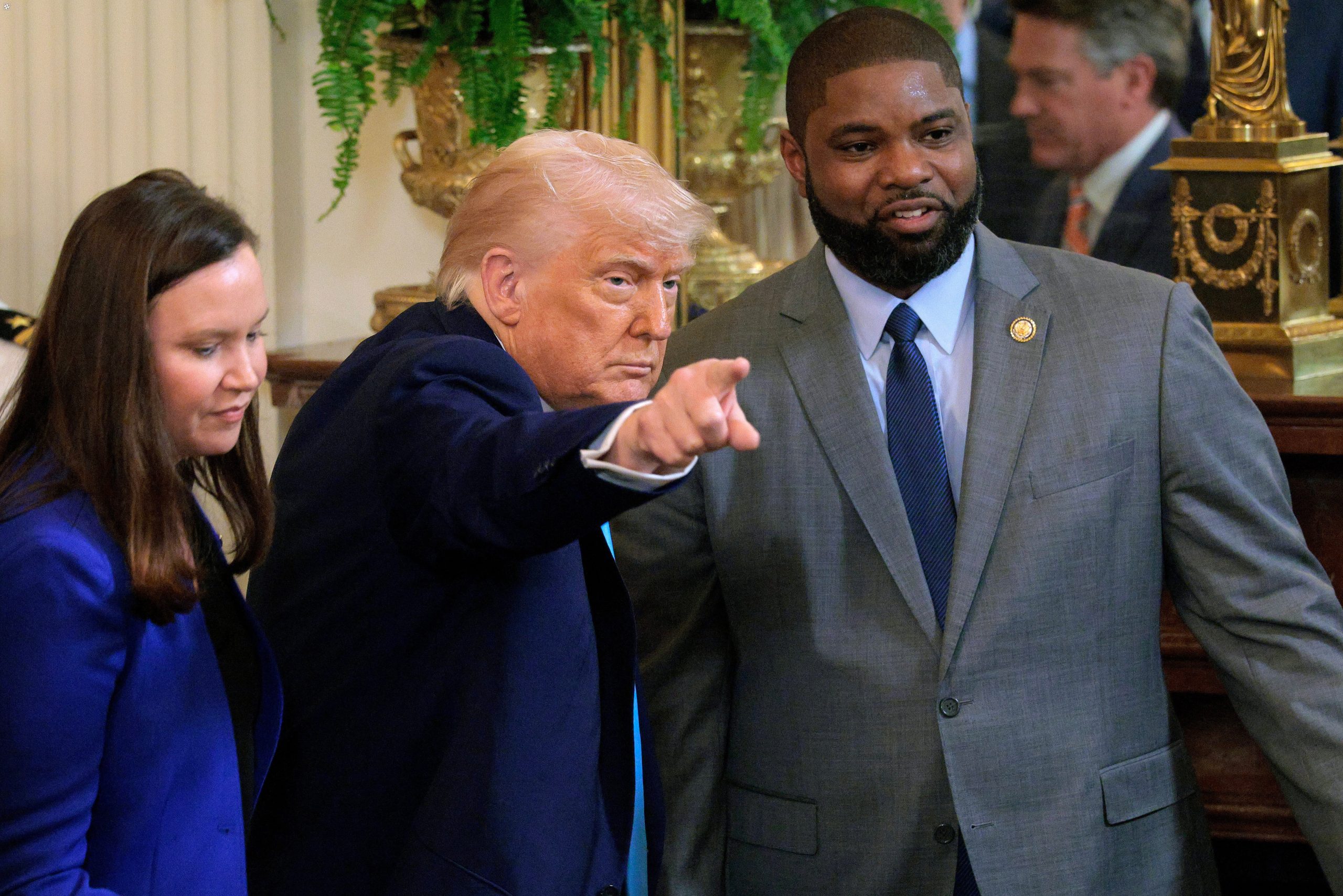
House Republicans propose drastic cuts to vital health and food safety programs, shifting responsibility to states. This controversial "One Big Beautiful Bill Act," demanding state-level solutions for poverty and potentially impacting gubernatorial candidates, faces criticism for its potential to harm vulnerable populations and exacerbate state budget challenges. The bill, aiming for a July 4th deadline, would slash Medicaid and SNAP funding to offset tax cuts benefiting wealthy Americans
Republican Governors-in-Waiting Face Funding Cuts Dilemma: Several GOP House and Senate members eyeing gubernatorial runs could soon implement their own deeply divisive legislation slashing Medicaid and SNAP benefits. Awkward interviews reveal mixed optimism and realism about the "One Big Beautiful Bill Act's" potential impact on state budgets. Will these candidates champion cuts they helped create, or face a backlash from constituents?
Rep. Ralph Norman (R-S.C.), a potential South Carolina gubernatorial candidate, expresses enthusiasm about the prospect of implementing proposed federal budget cuts. He views the changes as beneficial for the state and considers the governorship an honor. His comments follow the drafting of legislation cutting federal funding for critical health and food safety programs, a move that puts several GOP gubernatorial hopefuls in a challenging position
Rep. Ralph Norman (R-S.C.), a potential gubernatorial candidate and member of the hardline House Freedom Caucus, supports deep federal spending cuts. While other GOP gubernatorial hopefuls express optimism about the proposed legislation, they acknowledge the bill's significant fiscal impact on states. This creates a potential conflict for Republican governors who may need to implement these cuts to critical health and food safety programs
Pennsylvania's potential gubernatorial candidate, Rep. Dan Mueser (R-Pa.), embraces the challenge of reduced federal funding. He believes that the state's low rankings present an opportunity for improvement, stating, "You can do more with less… Once the Pennsylvanian people realize we've got nowhere to go but up, that's an opportunity." This reflects a broader GOP strategy to shift responsibilities to states, impacting potential gubernatorial candidates across the nation
The "One Big Beautiful Bill Act," demanded by President Trump by July 4th, proposes drastic cuts to Medicaid and SNAP benefits to fund massive tax cuts favoring the wealthy. This legislation significantly reduces state flexibility in Medicaid funding and, for the first time, potentially forces states to share SNAP costs, effectively pushing vulnerable populations off these crucial programs. The bill's impact on states is particularly concerning for Republican gubernatorial candidates who may face the challenge of implementing these cuts
Florida Congressman Byron Donalds' gubernatorial bid adds a new dimension to his call for states to bolster federal finances. Facing budget cuts to critical programs like Medicaid and SNAP under the proposed "One Big Beautiful Bill Act," Donalds and other Republican gubernatorial hopefuls—including Reps. Ralph Norman (SC) and Dan Mueser (PA)—face a challenging balancing act: advocating for federal spending cuts while potentially needing to manage their states' resulting budget shortfalls. This creates a unique political dilemma for these GOP lawmakers as they navigate the implications of their proposed legislation
Federal budget cuts loom: Republican lawmakers propose shifting critical health and food safety program funding to states. This controversial "One Big Beautiful Bill Act" could force gubernatorial candidates to implement drastic cuts to Medicaid and SNAP, impacting the poor and potentially creating significant challenges for state budgets. Will states shoulder the burden, or will this lead to a crisis?
Big Beautiful Bill: Tax Cuts Outweigh Spending Cuts, Expanding National Debt The "One Big Beautiful Bill" prioritizes massive tax cuts over spending cuts, dramatically increasing the national debt and federal deficit. This fiscally irresponsible legislation shifts the burden to states, jeopardizing crucial health and food safety programs like Medicaid and SNAP
Proposed Medicaid cuts spark outrage: A new Quinnipiac University poll reveals only 10% of voters support the Republican-backed "One Big Beautiful Bill Act," which slashes federal funding for Medicaid and SNAP. The deeply unpopular legislation faces significant opposition, with most voters expressing indifference or hostility towards the proposed cuts. This poses a major challenge for GOP lawmakers, several of whom are considering gubernatorial runs and would be responsible for implementing these cuts in their own states
Republican governors face a critical challenge: Their own proposed cuts to vital health and food safety programs. The Democratic Governors Association (DGA) highlights the "One Big Beautiful Bill Act" as a major vulnerability for GOP gubernatorial candidates, warning that states will struggle to replace lost federal Medicaid and SNAP funding. This legislation, pushing deep cuts to offset tax breaks for the wealthy, puts Republican candidates in a difficult position, forcing them to choose between implementing unpopular cuts or facing backlash for failing to support their own party's agenda
Medicaid Cuts: GOP's Political Vulnerability? Republican support for deep Medicaid cuts in the proposed "One Big Beautiful Bill Act" could severely hurt their reelection chances. House and Senate Republicans eyeing gubernatorial races face a difficult choice: implement potentially unpopular cuts or risk alienating voters. This political risk extends beyond individual candidates, threatening the entire Republican party
Republican governors voiced unanimous support for the One Big Beautiful Bill Act in a May letter to President Trump, emphasizing its increased funding for immigration enforcement
Early warnings emerged during the legislative process: state and local governments voiced concerns that proposed changes to federal funding for crucial health and food safety programs, like Medicaid and SNAP, would pose significant challenges
Proposed Medicaid cuts threaten program effectiveness and state flexibility, warn state government organizations. Mandated eligibility changes and reduced funding create costly consequences, including significant beneficiary coverage losses, increased medical debt, and uncertain long-term savings. This jeopardizes access to vital healthcare for millions and shifts significant financial burdens onto states
“If we’re going to continue these programs the way they are, states are going to have to pick up more and more of the dollars. It’s that simple.”
Republicans shied away from the most drastic changes to Medicaid’s funding formula that they first considered, but both the version of the bill that passed the House and the one now taking shape in the Senate would still have a big impact. Both would require states to check some Medicaid enrollees’ eligibility twice as often. The House bill would disallow states from increasing taxes on Medicaid providers, such as hospitals and nursing homes, that they use to finance a significant share of their Medicaid spending; the Senate version would force most states to cut their provider taxes.
But the biggest savings come from new “work requirements,” or limits on benefits for able-bodied adults who are either unemployed or unable to document their employment with a state Medicaid agency. When Medicaid work requirements have been tried in the past, in Arkansas, the paperwork itself proved to be the biggest obstacle to people remaining enrolled, though Republicans insist they won’t replicate the Arkansas experience.
While the broader bill is unpopular, surveys show people support the idea of work requirements, and it’s typically the first thing Republicans mention about their Medicaid changes.
“It’s something that you look at polls, 75% of people agree with. And it’s not harsh, and it’s gonna be all kinds of waivers — disabilities, mental anguish, children, grandparents, whatever,” Mueser said, describing reasons certain groups would be exempt from the work requirements.
Another major hit to state budgets would come from changes to SNAP food benefits. The House bill would require states to pick up at least 5% of the $100 billion annual cost of SNAP food benefits, with higher percentages required of states that have higher rates of erroneous payments. The Senate bill would only impose cost-sharing on states with high error rates.
The fate of the proposal is in doubt, however, after the Senate parliamentarian ruled Friday night that Republicans can’t include it in the legislation under the fast-track “budget reconciliation” rules they’re using to pass the bill. Republicans will have to either drop the provision or change it significantly.
House Agriculture Committee Chair Glenn Thompson (R-Pa.) told HuffPost earlier this year the cost-sharing proposal would be a big change: “That’s pretty difficult to do because most states have balanced budget amendments.”
Rep. Randy Feenstra (R-Iowa), an agriculture committee member who is running for governor, said it was simply a matter of making states improve their error rates. The CBO has estimated the House proposal would reduce enrollment by about 3 million over a decade.
For two decades, HuffPost has been fearless, unflinching, and relentless in pursuit of the truth. to keep us around for the next 20 — we can’t do this without you.
We remain committed to providing you with the unflinching, fact-based journalism everyone deserves.
Thank you again for your support along the way. We’re truly grateful for readers like you! Your initial support helped get us here and bolstered our newsroom, which kept us strong during uncertain times. Now as we continue, we need your help more than ever. .
We remain committed to providing you with the unflinching, fact-based journalism everyone deserves.
Thank you again for your support along the way. We’re truly grateful for readers like you! Your initial support helped get us here and bolstered our newsroom, which kept us strong during uncertain times. Now as we continue, we need your help more than ever. .
Already contributed? Log in to hide these messages.
For two decades, HuffPost has been fearless, unflinching, and relentless in pursuit of the truth. to keep us around for the next 20 — we can’t do this without you.
Already contributed? Log in to hide these messages.
“I just look at anything that we can do to correct the error rates on SNAP and then also, get rid of, obviously, some of the abuse that’s occurring,” he said. “So I think this is a fair way of doing it and, you know, I look forward to seeing how this plays out in the rest of the states.”
Source: Original Article