
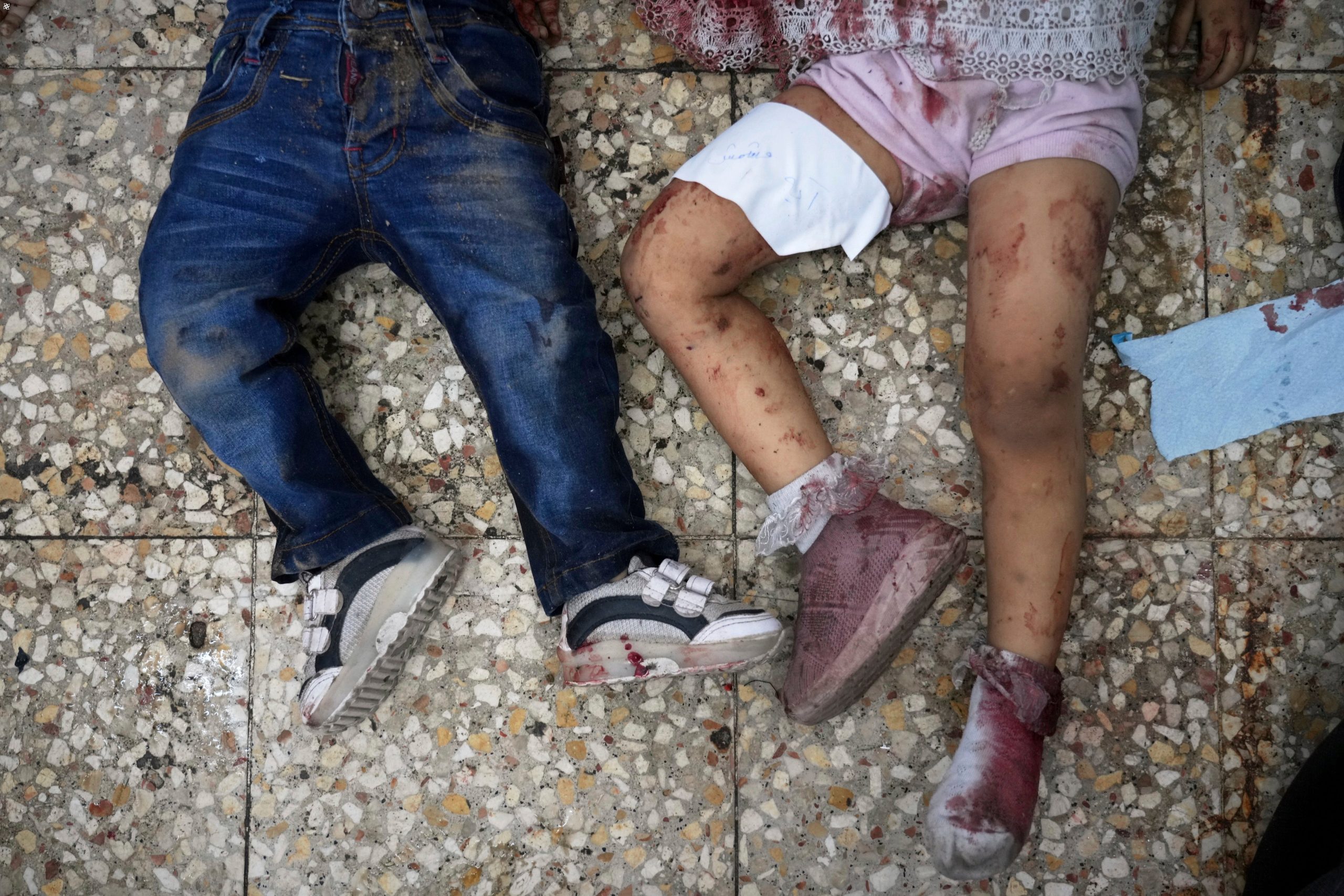
Trigger Warning: This article contains graphic descriptions of violence and suffering in Gaza. The content details the devastating impact of Israel's blockade on healthcare, including preventable deaths and life-or-death decisions faced by medical professionals due to lack of essential supplies and ongoing conflict
Gaza Health Crisis: Israel's Blockade Fuels Preventable Suffering and Death. Physicians for Human Rights report reveals Israel's weaponization of aid, including food and medicine, causing preventable deaths and immense suffering in Gaza's devastated healthcare system. Doctors face impossible choices, lacking essential supplies and equipment due to Israel's control over aid access. This ongoing humanitarian crisis demands immediate action
Gaza Health Crisis: Doctors Forced to Ration Care Due to Israeli Blockade. A Physicians for Human Rights report reveals that the Israeli blockade of Gaza is causing a devastating healthcare crisis. Lack of essential medical supplies forces doctors to make impossible life-or-death decisions for patients with treatable conditions, turning survivable injuries into fatalities. This critical shortage impacts everything from anesthesia for trauma patients to essential medications and infant formula, highlighting the urgent need for humanitarian aid access
For the past 21 months, doctors and other medical staff in Gaza have been treating patients either killed or wounded from Israel dropping U.S.-made bombs. Patients also come from controversial militarized aid sites, where Palestinians say Israeli forces carry out daily massacres.
“Treatable injuries transformed into terminal harm,” PHR executive director Sam Zarifi said. “Volunteer medical professionals face systematic Israeli policies and practices that directly prevent them from caring for the wounded and sick in Gaza.”
Israel’s control over how much and what kind of aid enters Gaza has pushed the territory’s health care system to the brink, with no fuel to keep hospitals running, no milk or baby formula for newborns, no food for the severely malnourished, no medication for chronic conditions and, oftentimes, no anesthetics for traumatic operations.
“I heard her screams before I saw her, a tiny 7-year-old girl was wheeled in, screaming at the top of her lungs. That’s when I saw that half of her leg was missing,” Dr. Mike Mallah, who was deployed to Gaza in March 2024, said in the report. “She was grabbing in desperation at the physician next to her, pleading for anesthetics. We rushed her into the operating room, despite knowing that the anesthesiologist had no sedation medicine or anesthesia drugs for her pain.
“As she continues to wither on the stretcher, the anesthesiologist just starts singing to her softly, like a lullaby,” he continued. “He knows that’s all he can do to comfort her.”
Foreign medical workers who volunteer their skills in Gaza have spoken at length about the restrictive and arbitrary nature of both how many health care professionals can enter the territory and what supplies they can bring. Such restrictions have only intensified this year, with health care workers running out of basic items like gloves, gauze and antiseptics.
“I saw countless patients — mostly women and children — come in with traumatic injuries from airstrikes. I saw my colleagues make heart-wrenching decisions about who to save with their limited surgical supplies, medications and equipment,” Dr. Aqsa Durrani, a Doctors Without Borders (MSF) USA board member who recently returned from Gaza, said on Monday.
“Meanwhile, the supplies we needed were left sitting in trucks on the other side of the border, blocked by Israeli forces,” she continued. “And the cruelty didn’t stop there; I saw children whose burns wouldn’t heal because they were malnourished and didn’t have enough food to get well. I saw children who were crying not because they had been maimed in the violence but because they were unbearably hungry.”
The World Health Organization stated that 11 trucks of medical supplies entered Gaza on Tuesday to be distributed at various health facilities, although humanitarians argue that this amount is minuscule compared to what Israel needs to permit. Doctors also stress that medical supplies can only be so helpful when Israel continues to attack Palestinian families and deny them sufficient food — which leads to slow wound healing, an inability to find disease and succumbing to severe malnutrition.
For two decades, HuffPost has been fearless, unflinching, and relentless in pursuit of the truth. to keep us around for the next 20 — we can’t do this without you.
We remain committed to providing you with the unflinching, fact-based journalism everyone deserves.
Thank you again for your support along the way. We’re truly grateful for readers like you! Your initial support helped get us here and bolstered our newsroom, which kept us strong during uncertain times. Now as we continue, we need your help more than ever. .
We remain committed to providing you with the unflinching, fact-based journalism everyone deserves.
Thank you again for your support along the way. We’re truly grateful for readers like you! Your initial support helped get us here and bolstered our newsroom, which kept us strong during uncertain times. Now as we continue, we need your help more than ever. .
Already contributed? Log in to hide these messages.
For two decades, HuffPost has been fearless, unflinching, and relentless in pursuit of the truth. to keep us around for the next 20 — we can’t do this without you.
Already contributed? Log in to hide these messages.
“If you don’t get killed from being bombed, you would get killed from lack of medical care and lack of wound care,” a nurse who worked in Gaza and is anonymous for safety said in the PHR report. “If you don’t get killed from being bombed or lack of wound or medical care, you would die of lack of nutrition because in order for a wound to heal, you need good nutrition, good protein, good hydration. And they didn’t have that.”
Neither the IDF nor COGAT, the Israeli agency overseeing aid deliveries, immediately answered HuffPost’s request for comment. Israel has previously maintained that its forces are firing “warning shots” at the militarized aid sites, and that it is allowing plenty of humanitarian assistance into Gaza.
Source: Original Article