
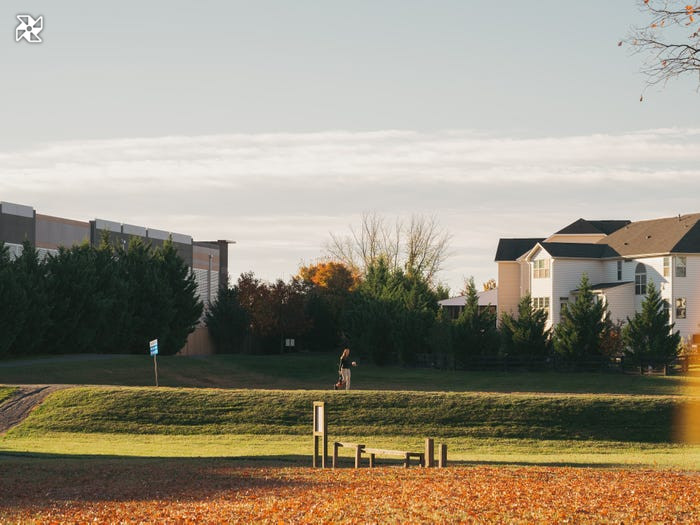
Northern Virginia Data Center Boom: Amberleigh Station Residents Face Noise, Pollution from Google's New Facility. First-time homeowner Mustafa Kaya's dream home in the serene Amberleigh Station neighborhood is shattered by the construction and operation of a nearby Google data center, highlighting the growing conflict between data center development and community quality of life in Prince William County. Noise pollution, diesel fumes, and construction disruptions are impacting residents' health and well-being, raising concerns about the environmental and social costs of the region's rapid data center expansion
Data center construction noise disrupts Amberleigh Station residents' peace. Loud equipment testing forced one homeowner to sleep in his basement, while diesel fumes permeate the air. Neighboring homes experience jackhammering before dawn and structural damage from blasting, impacting quality of life and mental health. This highlights the growing conflict between data center development and community well-being in Northern Virginia
Data center noise pollution is disrupting Northern Virginia residents' lives, causing sleep deprivation, anxiety, and even childhood trauma. Neighbors report jackhammering before 6 a.m., drywall cracks from blasting, and incessant fan noise leading to nightmares. One homeowner considered restarting anti-anxiety medication due to the constant construction disruption near their Amberleigh Station home. This highlights the growing conflict between data center development and community well-being in Prince William County and beyond
Northern Virginia's data center boom: Unprecedented construction of AI and cloud computing facilities brings noise, air pollution, and infrastructure challenges to residents, impacting quality of life and fueling community debate over development, jobs, and environmental concerns
Northern Virginia's data center boom: A clash of progress and quality of life. The influx of data centers in Prince William County brings jobs and tax revenue, but also fuels intense community conflict. Residents face noise pollution, environmental concerns, and rising housing costs, creating tension between those seeking to profit from the development and homeowners fighting to preserve their peaceful neighborhoods near Manassas National Battlefield Park. This conflict highlights the challenges of balancing economic growth with the preservation of quality of life and historical sites in the heart of America's AI revolution
Northern Virginia's data center boom: An AI revolution impacting homes and communities. A Business Insider analysis reveals that nearly half of the 1,240 US data centers built or approved are located within a mile of 5,000+ people, creating both economic opportunities and significant resident challenges, including noise pollution and environmental concerns. This AI-fueled construction wave is transforming neighborhoods, sparking debate about growth, infrastructure, and quality of life
Loudoun County, Virginia, dubbed "Data Center Alley," is the birthplace of the US data center industry. Its strategic location, near Washington, D.C., and midway along the Atlantic seaboard, combined with early tax incentives and a business-friendly regulatory environment, attracted major players like UUNet Communications, establishing a world-class internet exchange point. This spurred unprecedented growth, with over 176 data center facilities and campuses now operating in the county, transforming it into a tech hub
Prince William County's data center boom: From quiet suburbs to 77 campuses (40 owned by Amazon), impacting residents' quality of life. The rapid expansion of data center facilities, fueled by AI and cloud computing, brings economic benefits but also noise pollution, environmental concerns, and strained community relations. This unprecedented growth raises questions about balancing development with the preservation of residential serenity
Virginia's data center boom: A 156-page legislative report reveals a critical flaw. Auditors found that despite the incompatibility of industrial-scale data centers with residential areas, local ordinances allowed their construction adjacent to homes, often via zoning exceptions. This has resulted in significant noise pollution, air quality issues, and property damage for Northern Virginia residents, impacting quality of life and sparking community conflict. The report highlights the urgent need for stronger regulations to protect homeowners and address the negative consequences of this rapid data center expansion
Data center construction boom places Virginia homes near massive server farms: Nearly one-third of the state's operational data centers now sit within 200 feet of residential areas, raising concerns about noise pollution, air quality, and property values
Northern Virginia's data center boom: A 70%+ surge in home prices masks growing resident concerns. While Google and other companies highlight economic benefits and increased tax revenue in Loudon County (one of America's fastest-growing), residents like Mustafa Kaya cite disruptive noise, air pollution, and infrastructure strain from data center construction. Experiences range from sleepless nights due to equipment testing to cracked drywall from blasting, sparking debate over the balance between economic growth and quality of life in this rapidly developing region
Loudoun County's booming data center industry generated $875 million in tax revenue in FY2024, funding schools, transportation, and a significant tax cut saving homeowners an average of $3,500 annually. This economic growth contributes to a high quality of life, attracting residents to the area
Northern Virginia's data center boom is transforming idyllic communities like Amberleigh Station. Homeowners, once enjoying serene wooded backyards, now face noise pollution, air quality issues, and property devaluation from massive data center construction. The relentless expansion of data centers near population centers in Prince William County is impacting residents' quality of life, raising concerns about environmental damage and fueling community conflict. This escalating issue highlights the tension between economic development and preserving the character of suburban neighborhoods
Amberleigh Station residents flee as Google's massive data center construction project decimates their peaceful wooded neighborhood. One homeowner swiftly listed their house after receiving notice of the planned deforestation and construction of eleven data centers, impacting three sides of the community. The resulting noise, air pollution, and vibrations are causing significant distress among residents
Northern Virginia Data Center Noise Drives Homeowners Away: One couple sold their "forever home" above asking price and relocated after enduring unbearable noise and air quality issues from a nearby Google data center. Experiences like theirs highlight the growing conflict between data center development and quality of life in Prince William County, impacting sleep, health, and property values
Others are trying to exit strategically, seeking to organize their neighbors to sell their homes together to the highest data center bidder. Gallant said she had been in talks to do that within Amberleigh Station. Efforts are underway elsewhere in the county.
A group of property owners along Pageland Lane, in a northern part of the county, became the first large group to begin selling to the data centers in 2021. For nearly $1 million an acre for some, they agreed to sell some 2,100 acres to Compass Datacenters and QTS, a data center company owned by the Wall Street investing giant Blackstone.
The resulting project, known as the Prince William Digital Gateway, is expected to transform part of the county’s protected rural area and nestle up against Manassas National Battlefield Park, which commemorates the first and second battles of Bull Run.
The proposed sale ignited a backlash that resulted in the departure of at least two county supervisors. One, Pete Candland, reversed his opposition to the Digital Gateway project around the time his property was included in its final footprint. In December 2022, Candland resigned after the Office of the Commonwealth’s Attorney said it could be a conflict of interest for him to vote on future data center projects, he told Business Insider in an interview. Another supervisor, Ann Wheeler, lost a primary in 2023 to a challenger who campaigned on criticism of data centers.
Wheeler told Business Insider that the issue wasn’t the only reason she lost, but that “many of the opponents of the data center issue jumped on not because they were affected by a data center but because NIMBYism has advanced to BANANAism. Build Absolutely Nothing Anywhere Near Anyone.”
For many residents, the data centers’ sound rankles the most, a relentless whir of fans and cooling equipment that drowns out nature, invades conversation, and impedes sleep.
Amazon and other companies say they invest significantly in noise control efforts. Even when they do, the issue can fuel tensions with residents.
Carlos Yanes’ home sits higher than many of his neighbors’ in the Great Oak neighborhood in Prince William. Where that once provided a welcoming perch to hear the surrounding wildlife, it now puts him within range of the noise coming from Amazon’s data centers. He has felt the sound inside his house for most of the three years the facility has been operating and said he had to move his family’s sleeping quarters to the basement to get any rest.
Yanes, who works in the heating and cooling industry, spent almost $20,000 to replace his windows but it didn’t fix the problem, he said, standing in his backyard and raising his voice to be heard over a low drone from the Amazon facility. He says his son has been having nightmares in which the noise is actually a spaceship that has landed in the yard. “It’s not a good thing to be experiencing as a kid,” he said.
The challenge for public officials is that noise ordinances are typically crafted to capture intermittent noises, like firecrackers or house parties or jackhammers, not the constant drone given off by a data center. Yanes has been collecting sound measurements from his deck and sharing them with Dale Browne, his homeowner association’s former president. Their readings show that the lower-frequency data center noise driving Yanes’ family to sleep in the basement doesn’t often violate existing ordinances, which are written to measure standard midrange sounds.
According to the American Public Health Association, chronic noise exposure can lead to serious health problems, including cardiovascular disease, sleep disruption, and increased stress that can cause psychological disorders or early death. Children are among the most vulnerable.
Browne has shared Yanes’ noise findings with county officials and executives at Amazon, which beginning in 2022 made changes such as adding sound-dampening material to the fans and changing the shutters that allow air in and out of the building.
Kevin Miller, vice president for global data centers at Amazon Web Services, the company’s cloud-computing division, said Amazon initially sought to verify whether its facilities were responsible for reported noise, because “there’s lots of sources of sound potentially in these communities.” When it confirmed the noises coming from its data centers, it invested substantially, Miller said, adding that the centers now operate well below required levels and that Amazon doesn’t detect sound emissions that are “differentiable from the rest of the ambient noise.”
“We see data centers having a very minimal effect on communities at large,” Miller said in an interview.
The changes reduced, but didn’t eliminate, the noise, according to Browne and Yanes. Browne is now pressing the county to get its noise ordinance updated.
State lawmakers passed a bill during the 2025 session that would have directed local governments to require applicants to perform a noise analysis for potential data center sites. Virginia Gov. Glenn Youngkin has said that the testing should be optional, and that the legislature must reconsider the bill when it reconvenes next year, leaving the legislation’s future in doubt.
Virginia’s 329 data centers are mostly low-slung buildings that sprawl across the landscape. They have transformed open lots, fields, forests, and biodiversity into structures and paved parking lots.
Data center sites cover 7,200 acres in Virginia, with the facilities themselves occupying about a fifth of that space, according to the Virginia legislative commission’s report. Loudoun and Prince William counties together have more than 85 million square feet of data centers built or in development, an area equivalent to 1,485 football fields, and almost as much zoned for future data center developments.
“They transform landscapes, in hundreds of acres at a time,” said Kathy Kulick, the vice chair of a group of HOAs in Northern Virginia that have pushed back against the industry’s expansion.
Flora and fauna may suffer. In Fairfax County, just outside the Washington, DC, Beltway, a data center development threatens a nesting place for great blue herons, the solitary aquatic birds often seen standing in the shallow waters of local rivers and streams. Some residents fear that the development — managed by Penzance, a real estate developer that says its “goal is to leave everything better than we found it” — could disrupt the natural environment of a small but healthy aquatic ecosystem called Cub Run, where schoolkids learn about plant and animal life. The company has received a special zoning exemption allowing it to build a 110-foot-high structure.
Mike Graham, a local resident who refers to himself as a “bird nerd,” has been counting the heron nests since last spring. “I don’t want a 10-story data center in my backyard, but, moreover, I don’t want you to kill generations of birds to do it,” Graham said. Penzance didn’t respond to requests for comment.
Water supplies are also at risk. Many of the planned data centers being built in Prince William County will be sited in a catchment area for the Occoquan Reservoir, which provides the drinking water for 800,000 people in Northern Virginia, including many residents of Fairfax County (and which once spawned a 66-pound, 4-ounce catfish that set a state record.).
In its annual report for last year, Fairfax’s Environmental Quality Advisory Council identified elevated levels of salt, which can come from data center wastewater, as a particular worry.
The report warns that the approval of large data centers using evaporative cooling risked “blowdown” to the reservoir, which “would increase salt in a water source already stressed by salt.”
Some data center companies are moving away from reliance on water for cooling. The two companies developing Prince William County’s big Digital Gateway project, Compass and QTS, both said their facilities won’t use water cooling.
State environmental agencies have found at least two data centers out of compliance with the Clean Water Act, including a QTS facility in Piscataway, New Jersey. QTS has said that it failed to complete required sampling and reporting at one site. It agreed to implement compliance measures and settled the violations without an admission of fault, paying a penalty of $179,000.
For Jessica Buhl, who grew up in Prince William and enjoys watching the goldfinches and other birds outside her window about a mile from the proposed Digital Gateway, said she worries about contaminants in her well water.
Buhl, whose license plate on her GMC Yukon Denali reads “NOPWDG,” for Prince William Digital Gateway, said she had been looking at houses in Maine. She’s just not ready to leave.
“I can’t give up the fight,” she said, “until it’s really, truly over.”
One thing that has irked Buhl and some other local residents is the speed of the build-out.
In Prince William County, the board of supervisors moved quickly to rezone the Digital Gateway project and approved what would be a 37-facility campus adjacent to the Manassas National Battlefield Park. When the project is completed, dozens of data center buildings and high-voltage transmission lines will permanently alter the park’s surroundings.
The national park includes a Confederate cemetery and other spots on the National Register of Historic Places. The American Battlefield Trust has sued to stop the development.
The project also encompasses land that once belonged to the Thornton settlement, a community of free Blacks, and the plantation home of Jennie Dean, a freed woman who established a school and congregations in the area in the late 1800s.
“Digital Gateway south is almost entirely covered by the National Register of Historic Places,” said Kulick, the HOA organizer, who is also a member of the Prince William County Historical Commission, which opposed the rezoning. “In the face of all that, what do we protect? What’s important enough?”
A QTS spokesperson said that about 800 acres of the project were set to be protected, and that the company plans to donate land, install interactive kiosks, and create trails in local parks — including the Manassas battlefield.
Compass agreed to buffers of 1,500 feet between the project and other landowners, Katy Hancock, a company spokesperson, said by email. Open space will cover 39% of the 884 acres Compass owns as part of the development, she said, noting Compass agreed to plant 650 trees an acre in those areas if older trees needed to come down during construction.
Then there is the effect on the air.
Data centers require backup power, which means installing dozens of industrial-size diesel generators made by manufacturers like Caterpillar. An Amazon facility next to the Great Oak neighborhood is permitted for 97 diesel generators spread over four buildings. Multiply that over hundreds of buildings across Northern Virginia, and the number of diesel generators easily climbs into the thousands.
The data centers have contributed to regional air pollution — albeit less than 4% of the regional emissions of nitrogen oxides, according to the state legislature’s report. State officials were conducting further study, according to the report, which said most data center sites experienced no more than two minor outages in the past two years, nearly all lasting a few hours. Companies also test generators periodically to ensure proper functioning.
Graham, the self-described bird nerd, witnessed one such event recently when he stopped at a gas station in Sterling, Virginia, in late January. The generators of a nearby data center were running so loud it was hard to talk, he said. The generators’ exhaust caps “were full bore, wide open,” Graham said. “You could hear them and see them.”
Doug Sabin, an 80-year-old former cabinet maker and science teacher, lives 200 feet from the proposed Digital Gateway project. He has chronic obstructive pulmonary disease, brought on by a lifetime of smoking, and requires oxygen.
In Virginia, many facilities are being built years before they can get hooked up to the electricity grid, and Sabin worries that government officials will let them run on diesel generators until they can connect.
“What really has me concerned is that they’re going to ram this thing through before adequate power has a way of getting here,” he said in an interview, referring to the Digital Gateway.
A spokesperson for Virginia’s Department of Environmental Quality said it hadn’t received any such requests and expected data centers to comply with all applicable air regulations.
Sabin said he and his wife, who are among a group of plaintiffs who have sued to block the Digital Gateway, have discussed the prospect of leaving their home of 40 years if their legal challenge isn’t successful. “We thought we wanted to die here,” he said.
Operating at just 7% of their permitted limits, data center generators nationwide emit around 2,500 tons of nitrous oxide annually, according to a Business Insider analysis, which ran air center permits from every state with a data center through an Environmental Protection Agency tool that calculates public health burden. That’s equivalent to the air pollutants emitted by over 2 million passenger cars making a round-trip drive between New York and California.
Some data centers operate their generators in violation of the law. Business Insider found 56 civil penalties across nine states levied against tech companies because their centers were found to have violated air quality regulations, with fines totaling at least $1.4 million. The companies with the most penalties were CyrusOne, with seven, and Equinix, with six, followed by QTS with four and Amazon with three.
A spokesperson for Equinix said the company had been out of compliance “in a few limited circumstances,” and that: “We aggressively work to ensure that our facilities are in full compliance with all applicable regulations. A CyrusOne spokesperson said the company was “deeply committed to environmental responsibility.” Amazon said it had a proven track record of environmental compliance. QTS said violations at its data centers had been addressed and the company was in full compliance with the Clean Air Act and the Clean Water Act.
Air pollution may become a bigger concern as state officials grapple with the precariousness of Virginia’s grid. During a particularly intense heat wave in Virginia in the summer of 2024, thousands of Dominion Energy customers lost power over a 10-day stretch, according to Find Energy, which compiled outage counts from utilities, solar providers, consumers, and other sources. A Dominion spokesperson said that the outages were triggered by severe thunderstorms common there in the summer, and that the utility was significantly reducing storm-related outages with measures such as burying power lines.
If he has his way, Kaya, the resident of Amberleigh Station, won’t have to worry about those impacts for much longer. He and his family are looking to move, ideally to more mountainous terrain that is inhospitable to data center developments.
“My dream was to buy a place, own that place, and raise my children there,” he told BI. “I see that pretty much destroyed.”
About the data: Business Insider used air permits issued to data center backup generators to identify facility location and ownership, and estimate facility power use. We received permits from all but four states, plus Washington, DC. Business Insider also used 2020 US census data and data from the Environmental Protection Agency’s COBRA, AVERT, and EJSCREEN tools. Read more about how we investigated the impact of data center growth here.
Reporting: Hannah Beckler, Dakin Campbell, Daniel Geiger, Rosemarie Ho, Narimes Parakul, Adam Rogers, Ellen Thomas
Editing: Jeffrey Cane, Rosalie Chan, Jason Dean, Esther Kaplan, Jake Swearingen
Research: Darren Ankrom, Schuyler Mitchell, Trey Strange, Yuheng Zhan
Design and visuals: Dan DeLorenzo, Isabel Fernandez-Pujol, Jinpeng Li, Kim Nguyen, Randy Yeip, Rebecca Zisser
Photography: Kendrick Brinson, John David-Richardson, Greg Kahn, Brian Palmer, Jesse Rieser
Video: Robert Leslie, Gary Moon, Marco Secci
Copy editing: Mark Abadi, Kevin Kaplan
Source: Original Article