
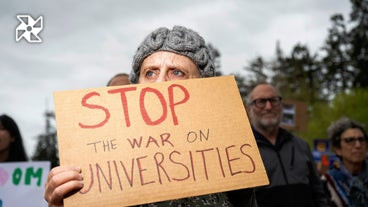
The soaring cost of college tuition, dramatically increasing since the 1970s, led to a surge in student loan borrowing starting 25 years ago. Promoted as a sound investment, students borrowed tens to hundreds of thousands of dollars, believing a degree guaranteed high-paying jobs and easy loan repayment. This narrative, however, masked the growing student debt crisis
Despite soaring college costs and promises of high-paying careers, millions of college graduates struggle with crippling student loan debt. Stagnant wages and rising living expenses—including housing, food, and childcare—have stretched budgets to the breaking point. By the end of 2024, over 43 million borrowers collectively owed a staggering $1.6 trillion in student loans, highlighting a national debt crisis
Trump Administration's Budget Exacerbates Student Debt Crisis: Making College Less Affordable
Trump's "Big Beautiful Bill": Hidden Student Loan Changes Exacerbate Debt Crisis
The July 4th budget, dubbed the "Big Beautiful Bill," significantly alters federal student loan programs, making higher education financing harder and repayment more challenging. While cuts to Medicaid, SNAP, and clean energy initiatives dominate headlines, this overlooked change exacerbates the existing student loan debt crisis. The bill's impact on millions of borrowers adds to the financial strain caused by reduced social safety nets and increased border enforcement spending. This legislation risks making college unaffordable and increases the burden of student loan repayment for countless Americans
Proposed Student Loan Changes Increase College Costs and Risks: Expert Warns
This new bill significantly alters federal student loan programs, impacting borrowers in three key ways: it eliminates most income-driven repayment plans, increasing repayment burdens for low-income graduates; it imposes stricter loan limits on graduate and parent borrowers, potentially limiting access to expensive programs like medical school; and it withholds federal funding from programs failing to meet specific graduate income thresholds. These changes could make higher education less affordable and accessible
Student loan eligibility will tighten, impacting access to funding for lower-paying associate degrees and high-cost certifications like medical fields. Increased repayment difficulty will affect all borrowers, exacerbating the existing student loan debt crisis
Eliminating co-signer options in the new federal student loan program could price many students out of college, warns Aissa Canchola Bañez, policy director at the Student Borrower Protection Center. This change, part of the recent budget bill, increases the financial burden and risk of higher education, impacting access for countless students
Trump administration's new federal student loan changes coincide with attacks on elite universities like Harvard and Columbia. These attacks, demanding an end to diversity programs and promoting right-wing faculty, threaten federal funding and focus on university governance, hiring practices, disciplinary policies, and ideological audits of students and faculty. This policy shift makes higher education more expensive and financially risky for students
Right-wing efforts to control higher education are escalating. Pressure on university leadership aims to inject conservative ideology, limiting academic freedom and restricting what professors can teach and say. This brazen attempt to control information flow from colleges raises concerns about broader impacts on American thought and discourse. The fight for academic freedom and against political interference in universities is intensifying
Trump Administration's New Budget Restricts College Access: The recent budget cuts significantly hinder access to higher education by tightening federal student loan programs, making college more expensive and debt repayment more difficult. This move follows a broader trend of slashing public service programs and raises concerns about equitable access to education
Student loan borrowers face increased hardship as the latest federal budget slashes aid and makes repayment more difficult. Policy changes are viewed as punitive measures against borrowers, reflecting a broader attack on access to higher education. This follows decades of rising tuition costs and stagnant wages, creating a $1.6 trillion student loan debt crisis
The fight over college isn't about attending; it's about access. While the Trump administration waged war on higher education, the underlying issue – fueled by false narratives about affirmative action – remains: who gets to pursue a college degree? This debate exposes the complexities of student loan debt, rising tuition costs, and the unequal playing field in higher education
Right-wing pressure on Ivy League universities aims to reshape higher education by eliminating programs deemed non-aligned, increasing conservative faculty hiring, and restricting international student admissions based on political views
The Trump administration's budget cuts threaten college affordability, limiting access to higher education for those who rely on federal student loans. This move, part of the "Big Beautiful Bill," significantly reduces financial aid, making college increasingly expensive and risky for millions of students
“What does this mean for higher education? The people who come from means are going to be the only ones who go to college,” Bañez said.
Currently, there are several different ways to pay back your student loans, including plans that take the borrower’s income into account and the Saving on a Valuable Education plan. The SAVE plan, which was introduced by the Biden administration in 2022, has been tied up in court. When the legal fight ends, current borrowers will have to begin using the new plans after July 1, 2028. For everyone else, the new plan goes into effect on July 1, 2026.
But the new federal student loan system only has two available options for repayment plans, with the only payment plan considering a borrower’s income being the repayment assistance plan, known as RAP. But even though it’s based on income, it doesn’t take inflation into consideration, meaning your monthly payment could increase even as your wages stay the same.
People who will be forced to enroll in one of the two new plans in 2028 are also in for an unpleasant surprise.
“They will see a significant increase in their monthly payments,” Kristin Blagg, a researcher at the Urban Institute, told HuffPost. The Trump administration’s repayment plans are not as generous as the current ones, because they don’t take as many aspects into the borrower’s financial health into account. “People coming from SAVE are going to be shocked at what they have to pay now.”
Project 2025, the conservative blueprint for a Republican president, calls for the privatization of the student loan system. But private loans come with more risk.
“The loans are not as favorable, the interest rates are higher, particularly if you have low credit,” Blagg said. Oftentimes, low-income borrowers need a co-signer to access private loans.
The new system also takes into account the earnings of alumni of certain program graduates when assessing whether to give out loans to future students. If graduates of programs fail to reach a certain income, students will not be able to use federal loans to attend those schools and study with those programs.
Blagg says most programs should meet the income threshold — but the risk falls heavily on the lower end of the scale. “The places where we worry are associate degrees,” she said. These are two-year degrees earned at community colleges by high school graduates and other adults looking to advance their careers. Students hoping to get an associate degree may have to figure out another way to pay.
Then there are the limits for how much graduate students and parents can borrow for their dependent children. Most graduate students will now be limited to $20,500 per year, with a lifetime cap of $100,000 down from $138,500. For professional schools, like schools for doctors or lawyers that are often fairly expensive, the limit will be $50,000 per year, capped at $200,000.
Making medical school harder to access could not be coming at a worse time: The American Association of Medical Colleges projects that the U.S. will have a shortage of 86,000 physicians by 2036.
Even though the Trump administration has been trying to reward people for getting married and having kids, the new repayment assistance plan also penalizes married borrowers. The changes look at your household income. For example, a single person making $55,000 a year would only have to pay 5% of their income, but a married couple each making $55,000 would pay a 10% rate on their combined income of $110,000. (RAP does, however, include a discount for borrowers with children. A whopping $50 will be taken off your monthly payment for each child a borrower has.)
“Married borrowers are going to have to be very careful,” Blagg said.
For two decades, HuffPost has been fearless, unflinching, and relentless in pursuit of the truth. Support our mission to keep us around for the next 20 — we can’t do this without you.
We remain committed to providing you with the unflinching, fact-based journalism everyone deserves.
Thank you again for your support along the way. We’re truly grateful for readers like you! Your initial support helped get us here and bolstered our newsroom, which kept us strong during uncertain times. Now as we continue, we need your help more than ever. .
We remain committed to providing you with the unflinching, fact-based journalism everyone deserves.
Thank you again for your support along the way. We’re truly grateful for readers like you! Your initial support helped get us here and bolstered our newsroom, which kept us strong during uncertain times. Now as we continue, we need your help more than ever. .
Already contributed? Log in to hide these messages.
It’s not clear if the Trump administration is making these changes because they believe it will benefit their voters. Republicans still think going to college is a good thing, and support ways to make it more affordable, including income-driven repayment plans for student borrowers.
According to a March 2025 poll from Third Way, a centrist advocacy organization, 79% of Republican respondents support payment plans that are affordable and make it harder to default on loans.
“It’s going to be a rude awakening for those who voted for something and are now getting something very different,” Bañez said.
Source: Original Article