
Israel launches airstrikes on Iranian nuclear facility, killing three senior commanders. The attack, part of a wider conflict, comes as Israel prepares for a prolonged war with Iran and faces retaliatory missile and drone attacks. The Israeli military claims significant damage to Iranian centrifuge production sites, while Iran reports minimal casualties. This escalation follows earlier strikes and raises concerns of a regional conflict
Escalating Middle East Conflict: Houthi Rebels Threaten US Naval Attacks Following Israeli Strikes on Iran. Yemen's Iranian-backed Houthi rebels have vowed to resume attacks on US warships in the Red Sea if the Trump administration joins Israel's military campaign against Iran. This threat follows a May ceasefire, raising concerns of wider regional war
Israeli airstrikes targeted a nuclear facility near Isfahan, Iran, causing damage but no casualties, according to Iranian officials. Smoke was seen rising near a mountain following the attack, which an Israeli military official confirmed targeted centrifuge production sites. This marks the second attack on Isfahan during the ongoing conflict
Israel launched a second overnight airstrike targeting two Iranian centrifuge production sites in Isfahan, aiming to cripple Iran's nuclear program. This follows an earlier attack in the opening hours of the conflict and confirms Israel's commitment to neutralizing Iran's nuclear capabilities. An anonymous Israeli military official confirmed the strike
IAEA confirms Israeli strike on Iranian nuclear facility, escalating Middle East tensions
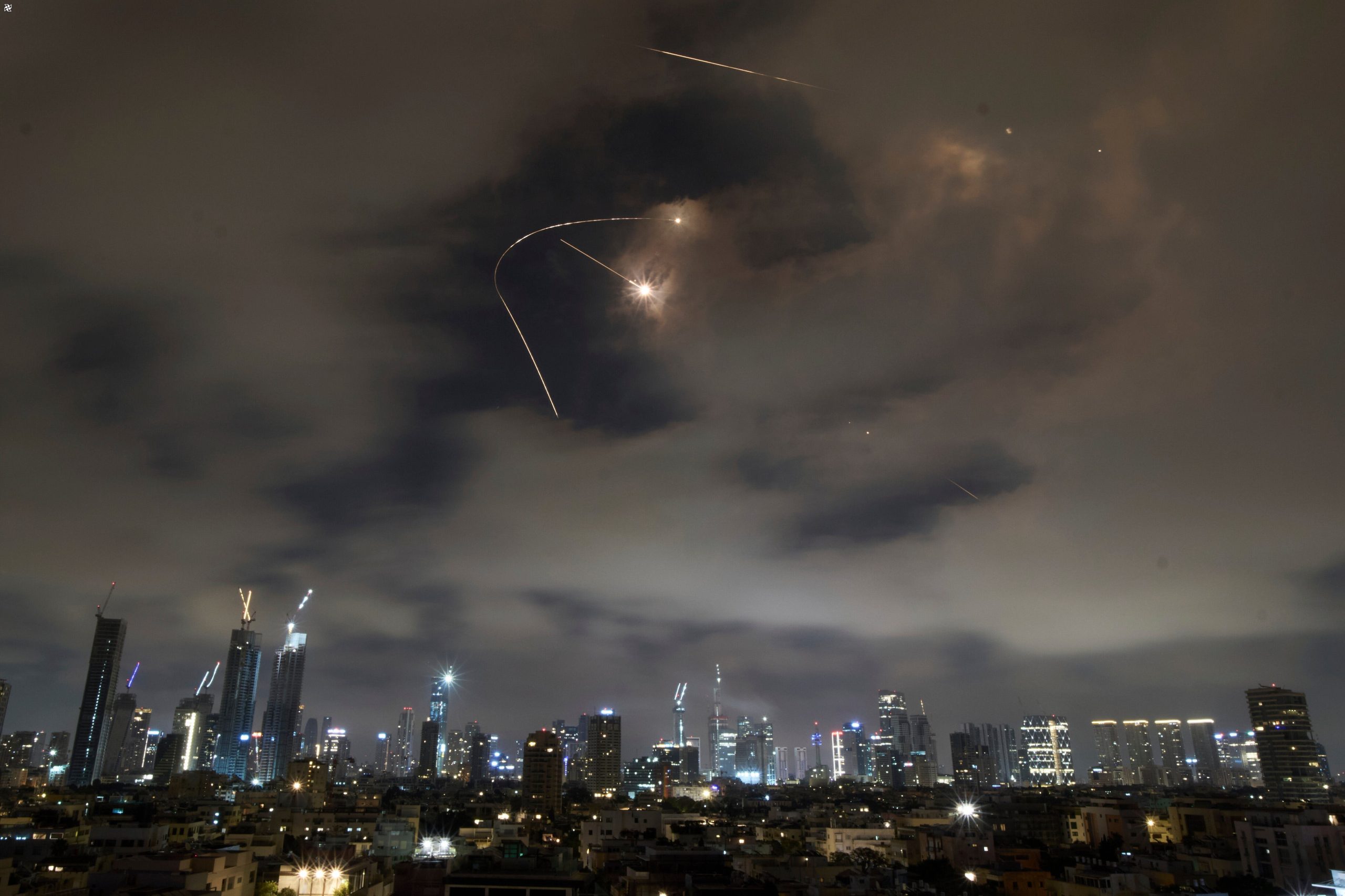
Israel intercepts Iranian drone and missile barrage; minor damage reported in northern Israel. A drone strike on a two-story building caused no casualties, according to Magen David Adom. Israel's military claims significant damage to Iranian launch capabilities
Israel intercepts Iranian missile barrage, neutralizing over half of the launchers. Following overnight Israeli strikes on Iranian nuclear facilities, a limited missile attack was largely thwarted by Israeli air defenses. Military officials reported the successful interception of a significant portion of the Iranian projectiles, estimating over 50% of the launch systems were disabled
Israel's military actions have significantly degraded Iran's ability to launch attacks, hindering its capacity to target Israel. Despite these setbacks, Iran retains considerable military capabilities
Israel's military prepares for a prolonged campaign against Iran following overnight strikes on Iranian nuclear facilities, as confirmed by Chief of Staff Lt. Gen. Eyal Zamir and IDF Spokesman Brig. Gen. Effie Defrin
Amid escalating Middle East tensions, President Trump considers direct US military intervention in the Iran conflict. Following Israeli strikes on Iranian nuclear facilities, Iranian Foreign Minister Abbas Araghchi warned of the "very dangerous" consequences of such involvement, speaking at an Organization of Islamic Cooperation meeting in Turkey. This follows Iranian threats of renewed attacks on US vessels
Iran's heavily fortified Fordo nuclear facility, protected by its underground location, is considered virtually invulnerable to all but the most powerful bunker-buster bombs. President Trump's decision on potential military intervention remained pending, with a two-week delay announced
Israel launched a large-scale military operation against Iran on June 13th, targeting nuclear facilities, military sites, and top Iranian officials. Airstrikes resulted in at least 722 Iranian deaths, including 285 civilians, and over 2,500 injuries, according to a Washington-based Iranian human rights group. This sparked a wider conflict, with retaliatory attacks and the threat of escalating war
Iranian civilians recount harrowing experiences following Israeli strikes. Nasrin, hospitalized after a blast threw her against a wall, describes multiple surgeries and extensive injuries. Another resident, Shahram Nourmohammadi, witnessed a devastating explosion while making deliveries. These accounts highlight the human cost of the escalating conflict between Israel and Iran
Iran has retaliated by firing more than 450 missiles and 1,000 drones at Israel, according to Israeli army estimates. Israel’s multitiered air defenses have shot down most of them, but at least 24 people in Israel have been killed and hundreds wounded.
Iran's nuclear program, claimed to be solely for peaceful purposes, has reached 60% uranium enrichment—dangerously close to weapons-grade levels (90%)—a threshold unmatched by any other non-nuclear state. Meanwhile, Israel, widely suspected of possessing nuclear weapons, maintains a policy of deliberate ambiguity regarding its nuclear capabilities
Israeli Prime Minister Benjamin Netanyahu has said Israel’s military operation will continue “for as long as it takes” to eliminate what he called the existential threat of Iran’s nuclear program and ballistic missile arsenal.
Talks in Geneva on Friday failed to produce a breakthrough. European officials expressed hope for future discussions. Iran’s foreign minister said he was open to further dialogue while emphasizing that Tehran had no interest in negotiating with the U.S. while Israel continues to attack.
“Iran is ready to consider diplomacy once again, and once aggression is stopped and the aggressor is held accountable for the crimes committed,” he told reporters.
No date was set for a new round of talks.
For many Iranians, updates remained difficult. Internet-access advocacy group NetBlocks.org said Saturday that limited internet access had again “collapsed.” A nationwide internet shutdown has been in place for several days.
Israel’s opening attack killed three of Iran’s top military leaders: one who oversaw the armed forces, Gen. Mohammad Bagheri; one who led the paramilitary Revolutionary Guard, Gen. Hossein Salami; and the head of the Guard’s ballistic missile program, Gen. Amir Ali Hajizadeh.
Israel’s defense minister said Saturday the military has killed a Revolutionary Guard commander who financed and armed Hamas in preparation for the Oct. 7, 2023, attack on Israel that sparked the ongoing 20-month war in Gaza.
Iranian officials did not immediately confirm Saeed Izadi’s death, but the Qom governor’s office said there had been an attack on a four-story apartment building and local media reported two people had been killed.
Israel also said it killed the commander of the Quds Force’s weapons transfer unit, who it said was responsible for providing weapons to Hezbollah and Hamas. Behnam Shahriyari was killed while traveling in western Iran, the military said.
Iranian leaders say IAEA chief Rafael Grossi’s statements about the status of Iran’s nuclear program have prompted Israel’s attack.
On Saturday, a senior adviser for Iran’s Supreme Leader Ali Khamanei, Ali Larijani, said in a social media post, without elaboration, that Iran would make Grossi “pay” once the war is over.
Grossi, the head of the U.N. nuclear watchdog, warned Friday at an emergency meeting of the U.N. Security Council against attacks on Iran’s nuclear reactors, particularly its only commercial nuclear power plant in the southern city of Bushehr.
“In case of an attack on the Bushehr nuclear power plant, a direct hit would result in a very high release of radioactivity,” Grossi said, adding: “This is the nuclear site in Iran where the consequences could be most serious.”
Israel has not targeted Iran’s nuclear reactors, instead focusing its strikes on the main uranium enrichment facility at Natanz, centrifuge workshops near Tehran, laboratories in Isfahan and the country’s Arak heavy water reactor southwest of the capital.
Iran previously agreed to limit its uranium enrichment and allow international inspectors access to its nuclear sites under a 2015 deal in exchange for sanctions relief. But after Trump pulled the U.S. out of the deal during his first term, Iran began enriching uranium up to 60% and restricting access to its nuclear facilities.
Iran has insisted on its right to enrich uranium — at lower levels — in recent talks over its nuclear program. But Trump, like Israel, has demanded Iran end its enrichment program altogether.
For two decades, HuffPost has been fearless, unflinching, and relentless in pursuit of the truth. to keep us around for the next 20 — we can’t do this without you.
We remain committed to providing you with the unflinching, fact-based journalism everyone deserves.
Thank you again for your support along the way. We’re truly grateful for readers like you! Your initial support helped get us here and bolstered our newsroom, which kept us strong during uncertain times. Now as we continue, we need your help more than ever. .
We remain committed to providing you with the unflinching, fact-based journalism everyone deserves.
Thank you again for your support along the way. We’re truly grateful for readers like you! Your initial support helped get us here and bolstered our newsroom, which kept us strong during uncertain times. Now as we continue, we need your help more than ever. .
Already contributed? Log in to hide these messages.
For two decades, HuffPost has been fearless, unflinching, and relentless in pursuit of the truth. to keep us around for the next 20 — we can’t do this without you.
Already contributed? Log in to hide these messages.
___
Rising reported from Dubai, United Arab Emirates. Associated Press writers Mehmet Guzel in Istanbul, Josef Federman in Jerusalem and Farnoush Amiri and Jon Gambrell in Dubai contributed to this report.
Source: Original Article