
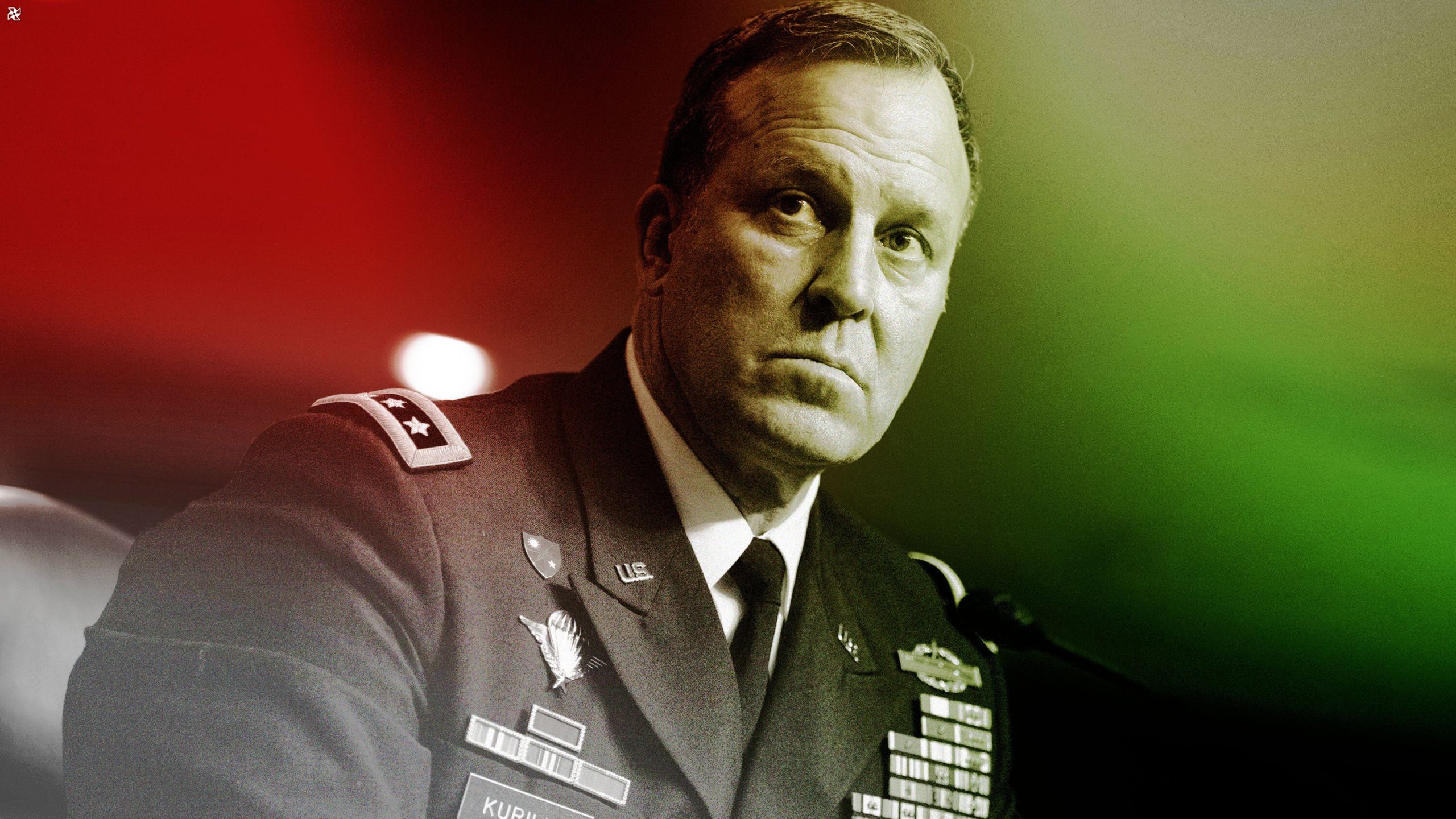
US Military Buildup in Middle East Fuels Speculation of Joint Iran Offensive with Israel. Dozens of US Air Force refueling tankers and a US aircraft carrier are deploying to the region, raising concerns about potential US involvement in an Israeli operation against Iran. This military mobilization follows reports of increased influence from US Central Command Commander Erik Kurilla, known for his close ties to Israeli military and intelligence officials
US Military Buildup Raises Specter of Direct Involvement in Iran Conflict: Despite mixed signals from the Trump administration, the deployment of US Air Force refueling aircraft and a carrier strike group to the Middle East increases the likelihood of US military intervention in the Israel-Iran conflict. The influence of CENTCOM Commander Erik Kurilla, known for his close ties to Israeli intelligence, is seen as a key factor in this escalating situation
US Military Buildup in Middle East Fuels Iran War Concerns: Is Kurilla Influencing Trump's Decision? The deployment of US Air Force refueling aircraft and an aircraft carrier to the Middle East raises the specter of imminent US involvement in the Israeli-led offensive against Iran. While President Trump's stance remains ambiguous, the escalating military presence suggests growing influence from General Michael "Erik" Kurilla, the US CENTCOM commander, known for his close ties to Israeli military and intelligence officials and his hawkish views on Iran. This raises questions about the potential for a US-Israeli joint operation and the overriding of diplomatic efforts
US Central Command Commander Michael Kurilla's close ties to Israeli military and intelligence officials raise concerns about potential US involvement in an Israeli offensive against Iran. Sources reveal Kurilla's exceptionally strong relationship with Israel, exceeding that of other US officials. This proximity, coupled with Israel's unwavering view of Iran as a direct threat, contrasts with the US's attempts at diplomacy. Kurilla's access to Israeli intelligence has reportedly given him unique insights into Iranian activities, influencing his perspective and potentially impacting US military strategy in the Middle East
A former U.S. official, speaking anonymously, revealed that General Michael Kurilla possessed superior intelligence on Iran's activities, exceeding that of any other government official. This privileged access to Israeli intelligence highlights Kurilla's significant influence on potential U.S. military action against Iran
Despite President Trump's repeated vows to avoid costly foreign wars, some conservative voices within the administration have expressed concerns about Israel's aggressive military stance toward Iran and the influence of U.S. Central Command chief, Michael "Erik" Kurilla. Kurilla's close ties to Israeli military and intelligence officials, who view Iran as an imminent threat, have raised questions about his potential role in escalating U.S. involvement in a potential conflict
Former Pentagon official Dan Caldwell reveals concerns about General Michael "Erik" Kurilla's influence on potential US military action against Iran. Caldwell suggests Kurilla's differing perspective on Middle East policy and belief in a less costly Iran military campaign may be driving increased pressure for preemptive strikes before his retirement. This coincides with a significant US military buildup in the region, raising questions about escalating US-Iran tensions
Four-Star General Michael Kurilla's Departure: US Military Support for Israel and the Iran Conflict
General Kurilla, the top US military commander in the Middle East, is stepping down after overseeing increased US military aid to Israel following the October 2023 Hamas attacks. His tenure, beginning April 2022, involved coordinating US support for Israeli operations in Gaza and Lebanon, and bolstering Israeli defenses against Iranian retaliation. His close ties to Israeli military and intelligence officials, and his access to key intelligence, have fueled debate regarding US involvement in a potential conflict with Iran
US Military Commander Michael Kurilla's Role in Potential Iran Strike: A Biden-Trump Era Analysis. A former official reveals Kurilla's involvement in US-Israel joint strike planning under both Biden and Trump administrations, highlighting clashes with Pentagon officials over strategic focus amid increased military presence in the Middle East. The article explores Kurilla's close ties with Israeli military and intelligence, his access to key intelligence, and differing viewpoints on Iran within the Trump administration
As General Kurilla's departure nears, advocates for a US-Israel strike on Iran—a prospect national security experts warn could escalate into uncontrollable violence—push for presidential approval before he leaves office. With increased military deployments to the Middle East signaling potential US involvement, this may be the final opportunity for proponents of a strike to secure President Trump's authorization
Israel and its US allies see a crucial window of opportunity to weaken Iranian influence in the Middle East. Recent setbacks for Hezbollah in Lebanon and the Syrian conflict, coupled with increased US military presence in the region, suggest a potential shift towards joint action against Iran. This heightened military posture raises questions about the future of US-Iran relations and the potential for direct military intervention
US-Israel alliance: Hawks push for Iran strike, overshadowing Palestinian suffering. The escalating military buildup in the Middle East, including the deployment of US refueling aircraft and a carrier, fuels concerns of imminent US involvement in an Israeli offensive against Iran. Some US officials, across both Biden and Trump administrations, prioritize securing Israel's position, deflecting criticism of the humanitarian cost and legal violations stemming from past conflicts. This narrative prioritizes a perceived historical achievement over the significant human toll on Palestinians, Lebanese, and others
US Military Commander Kurilla's Israel-Inspired Yemen War Plan Raises Concerns: His close ties to Israeli military and intelligence officials, and his adoption of Israel's military strategy in Yemen, focusing on targeting the Houthi militia, have fueled debate about potential US involvement in a conflict with Iran. Critics cite concerns over a lack of strategic planning for post-conflict stability and the potential for costly, unstrategic wars
Trump's Iran policy faces a critical test: Will a potential US-Israel joint military operation derail nuclear negotiations? While some believe military action could pressure Iran into diplomacy, most experts doubt Tehran will negotiate under attack or perceive a threat of unconditional surrender. This conflict underscores the tension between military intervention and diplomatic solutions in the ongoing Iran nuclear crisis
US intelligence contradicts Israel's claim of imminent Iranian nuclear weapon development, as reported by the Wall Street Journal and confirmed by Director of National Intelligence testimony. Iranian officials have consistently denied pursuing nuclear weapons
The most-cited goal of advocates of a joint U.S.-Israeli attack is for Washington to use massive bombs and bombers, which Israel lacks, to target Iran’s deeply buried Fordow uranium enrichment plant.
Analysts note Iran’s reaction would likely be intense and unpredictable, potentially including attacks on U.S. forces or global trade routes, and that even destroying Fordow would not eliminate Tehran’s nuclear expertise, while potentially emboldening hawks to seek further violence to topple the Iranian regime.
Reached for comment for this story, a U.S. Central Command spokesperson directed HuffPost to the White House. Spokespeople there did not respond to a request for comment.
Kurilla likely has uncommon sway on Iran in an administration where other power players have lost or given up influence.
Scandal-ridden Defense Secretary Pete Hegseth has struggled to staff the political ranks of the Pentagon or position himself as a major player in policy. In the Middle East, Kurilla is seen as having “an outsize role” because of “instability” at the Defense Department, a regional source, who spoke on the condition of anonymity, told HuffPost.
“Kurilla is both a prominent figure, in that everyone knows his name and previously few [in U.S. Central Command] would enjoy such a public profile, and leadership is engaging with him over Hegseth because he’s useless,” the source continued. (Hegseth is, in any case, close with Netanyahu.)
Meanwhile, other players in U.S. national security circles have either been weakened or have shown themselves less inclined to advocate for particular ideas — even those they had previously endorsed — than to demonstrate fealty to Trump, like Secretary of State Marco Rubio, who plans to fire nearly 2,000 diplomats despite his past support for the agency he now leads.
Kurilla’s influence “is empowered and emboldened by the complete dismantling of the State Department and its embassies all over the world,” the regional source said.
“Everyone knows his name … and leadership is engaging with him over Hegseth because he’s useless.”
Middle Eastern governments close to the U.S. are attempting to encourage de-escalation, but they have failed to restrain other American-backed offensives currently led by Netanyahu. “20 months into the Gaza war, I think there is both exhaustion and relative hopelessness at being able to sway U.S. minds on these conflict dynamics,” the source said.
Military commanders like Kurilla have expertise in battlefield wins but not in long-term strategy or managing domestic political outcomes of particular national security choices, noted Rosemary Kelanic, the Middle East program director at the Defense Priorities think tank.
“Kurilla seems very interested in the U.S. getting more engaged in the region… and seems to be interested in military solutions that take a long time to come to fruition and involve a lot of resources, none of which I think is something President Trump is particularly interested in,” Kelanic said. “I worry about civil-military relations and what the appropriateness is of military commanders pushing for certain policy outcomes.”
Under Trump, who she said “hero worships the military,” there’s a particular risk of a figure like Kurilla dominating internal discussions.
“It’s always hard for a president to stand up to the military… that’s especially hard for Trump because he sort of views the military as this almighty power that the United States has,” Kelanic said. “If the military comes in with the stars and badges, it’s hard not to be swayed by them. I think the military is doing it because they have the U.S.’s best interest at heart, but they only have part of the picture.”
Kurilla has gained “exceptional access” to the Oval Office under Trump, which even the past chairman of the joint chiefs of staff, C.Q. Brown, lacked, a former Pentagon official told Nikkei Asia. (In addition to pushing out diplomats, the Trump administration has replaced senior military personnel, including Brown.)
Trump may yet choose to keep the U.S. out of the war with Iran, instructing Kurilla and other aides to present the American military buildup as a negotiating tactic with Tehran.
“If we can get Israel to stop even temporarily and the U.S. stays out itself, then the U.S. and Israel can go to Iran and say… let’s go to the table,” Kelanic said. Still, reestablishing trust with Iranians for talks will be challenging, she said, and before even getting there, the U.S. will need to restrain Israel.
Kurilla has previously conveyed to Israelis that Trump has not wanted to attack Fordow, and endorsed the idea of a deal preventing Iran’s development of nuclear weapons. He is “hawkish but reasonable,” the former U.S. official said.
A Biden administration official, who spoke on condition of anonymity, presented Kurilla’s mindset as common among U.S. military officers in his position “because all of them came up with the Iraq War,” during which Iran-backed militias extensively attacked American troops.
Vice President JD Vance used a Tuesday post on X to suggest Trump remained leery of intervention abroad. “People are right to be worried about foreign entanglement after the last 25 years of idiotic foreign policy. But I believe the president has earned some trust on this issue. And having seen this up close and personal, I can assure you that he is only interested in using the American military to accomplish the American people’s goals,” Vance wrote.
And the Trump administration on Sunday sent Middle Eastern governments another diplomatic note saying the U.S. did not plan to become involved in the war, echoing a heads-up Washington sent before Israel’s attack, an Arab official, who spoke on condition of anonymity, told HuffPost.
Still, it will be an uphill battle to avoid U.S. involvement, given pro-war voices’ effectiveness so far in convincing Trump that the Israeli campaign is a winning proposition. The president’s increasingly bellicose rhetoric, the composition of his team and the unified front among savvy hawks — from Netanyahu and Sen. Lindsey Graham (R-S.C.) to pro-Israel hard-liners like the lobby group AIPAC — all point to an imminent decision for the U.S. to strike Iran, an outcome presidents have sought to avoid for decades.
“It would take some herculean leadership by Trump to avoid it,” Kelanic said, noting the president’s capacity to craft a complex, effective policy is weaker because he “kneecapped the federal government.”
Some forces outside the administration believe they can create public pressure for peace. Several lawmakers announced on Monday night that they would support a resolution barring U.S. involvement in Israel’s campaign.
Rep. Ro Khanna (D-Calif.), who is helping lead the effort alongside Republican Rep. Thomas Massie (R-Ky.), told HuffPost he believes if the bill can secure a vote, it could win support from “at least 200 Democrats” and more than 40 Republicans, and that he hopes to organize such a vote in the coming days. (Massie is currently the only Republican supporting the measure.)
“Kurilla’s job is to be prepared for all scenarios. The problem is the political leadership,” Khanna said, saying Democrats, in particular, should demonstrate the U.S. would not provide a “blank check” for Netanyahu.
But that’s effectively been Washington’s pattern for nearly two years, even as the U.S. has been repeatedly implicated in alleged Israeli war crimes, and as tensions and instability have grown in the Middle East.
For two decades, HuffPost has been fearless, unflinching, and relentless in pursuit of the truth. to keep us around for the next 20 — we can’t do this without you.
We remain committed to providing you with the unflinching, fact-based journalism everyone deserves.
Thank you again for your support along the way. We’re truly grateful for readers like you! Your initial support helped get us here and bolstered our newsroom, which kept us strong during uncertain times. Now as we continue, we need your help more than ever. .
We remain committed to providing you with the unflinching, fact-based journalism everyone deserves.
Thank you again for your support along the way. We’re truly grateful for readers like you! Your initial support helped get us here and bolstered our newsroom, which kept us strong during uncertain times. Now as we continue, we need your help more than ever. .
Already contributed? Log in to hide these messages.
For two decades, HuffPost has been fearless, unflinching, and relentless in pursuit of the truth. to keep us around for the next 20 — we can’t do this without you.
Already contributed? Log in to hide these messages.
“This crisis is taking place as a result of a bipartisan delusion that the U.S. benefits when the Israeli government can bomb anyone, anywhere, and experience no consequences from its most important backer,” Sara Haghdoosti, the executive director of the advocacy group Win Without War, told HuffPost. “Trump owns the current war, but it is unimaginable that we would even be in this position without the Biden administration’s failure to rein in Netanyahu’s bombing in Gaza, Lebanon, Syria, and beyond.”
It’s up to the president to decide whether to break with that status quo. “Kurilla has the upper hand. But the decision is Trump’s,” Daniel Shapiro, a former U.S. ambassador to Israel and Pentagon official, wrote on X on Monday.
Source: Original Article