
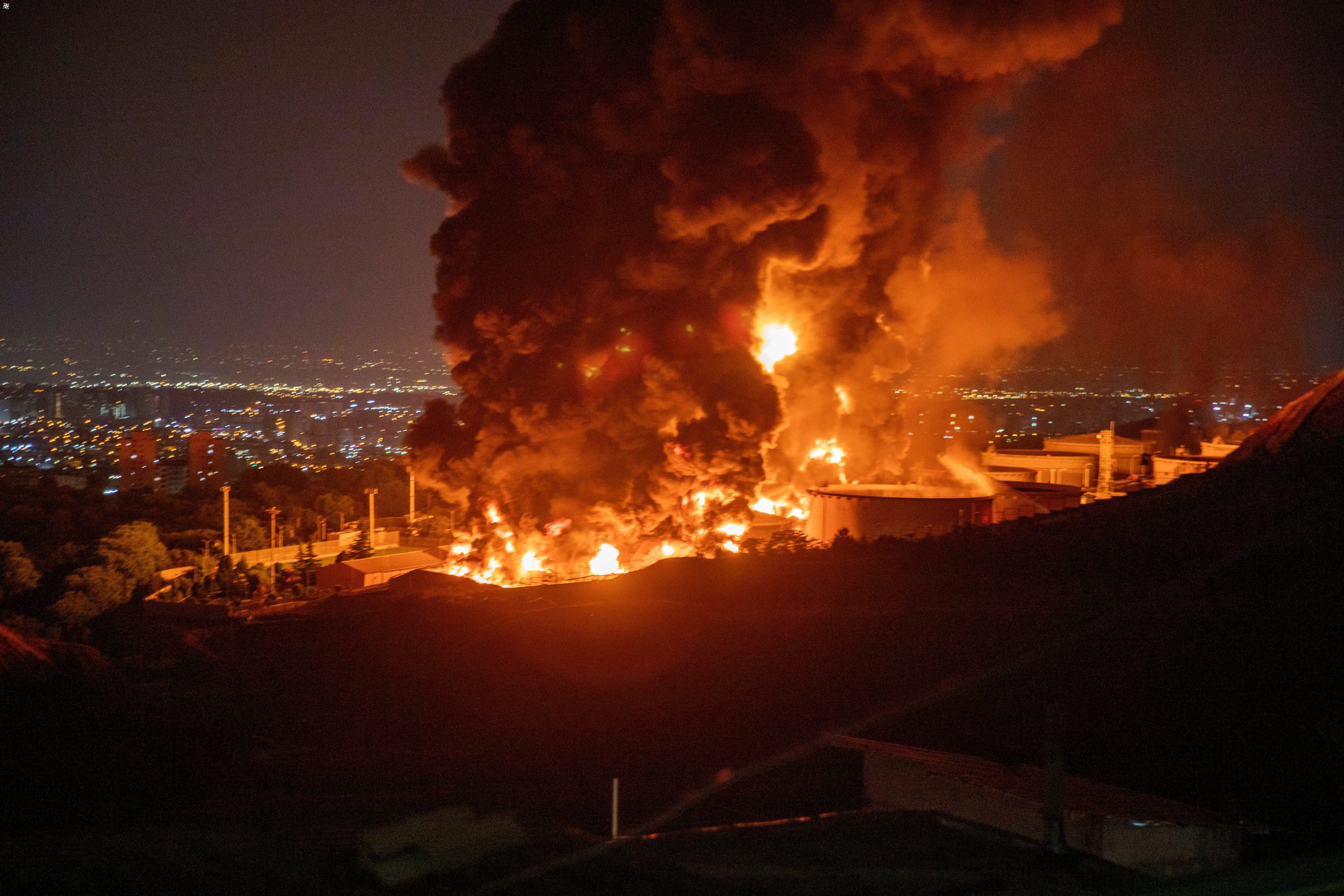
Israel's third day of airstrikes on Iran escalates tensions, prompting threats of further retaliation. Iranian missiles breached Israeli defenses, striking key buildings. Planned nuclear talks are canceled, raising fears of a protracted regional conflict following Friday's surprise attacks on Iranian nuclear and military sites. The escalating situation threatens global energy markets as Israel targets Iranian oil refineries and warns of further strikes
Israel's surprise attack on Iran's nuclear facilities and military sites sparked a dangerous escalation. The Friday strikes, killing top Iranian generals and scientists, triggered retaliatory threats and a potential regional conflict. With oil refineries targeted and Iran's energy sector at risk, global markets face significant uncertainty. Neither side shows signs of de-escalation, raising fears of a protracted war in the Middle East
Israel escalates Iran attacks, issuing evacuation warning for arms factories. Following fresh explosions in Tehran, the Israeli military's social media post signals a potential expansion of the ongoing military campaign
Trump Backs Israel's Iran Strikes, Demands New Nuclear Deal to Halt Further Conflict. Following Israel's extensive military action against Iranian nuclear and military sites, President Trump voiced unwavering support, urging Iran to avert further destruction by accepting a revised nuclear agreement
Iran's Foreign Minister Abbas Araghchi issued a warning: Iranian retaliation for Israeli airstrikes will cease only if the attacks stop. He further accused the U.S. of complicity, demanding U.S. accountability for the escalating Iran-Israel conflict
Fresh Explosions Rock Tehran and Iran After Israeli Airstrikes; Death Toll Remains at 78
Israel-Iran Conflict: Deadly Strikes Kill 13, Airport Closure Continues. At least 13 Israelis died in Iranian retaliatory strikes, prompting a third day of airport closure and escalating tensions in the Middle East. The ongoing conflict follows Israeli airstrikes on Iranian military and nuclear sites
Israel launched devastating airstrikes on Iran, targeting key military sites, including the Defense Ministry, air defense systems, and facilities linked to its nuclear program. The precision attacks, resulting in the deaths of several high-ranking Iranian generals and nuclear scientists, suggest a significant Israeli intelligence penetration. This escalation raises concerns of a wider conflict and potential global impact
In a sign that Iran expects the Israeli strikes to continue, state television reported that metro stations and mosques would be made available as bomb shelters for the public beginning on Sunday night.
In Israel, at least six people, including a 10-year-old and a 9-year-old, were killed when a missile hit an apartment building in Bat Yam, near Tel Aviv. Daniel Hadad, a local police commander, said 180 people were wounded and seven are still missing.
An Associated Press reporter saw streets lined with damaged and destroyed buildings, bombed out cars and shards of glass. Responders used a drone at points to look for survivors. Some people could be seen leaving the area with suitcases.
Another four people, including a 13-year-old, were killed and 24 wounded when a missile struck a building in the Arab town of Tamra in northern Israel. A strike on the central city of Rehovot wounded 42.
The Weizmann Institute of Science, an important center for research in Rehovot, said “there were a number of hits to buildings on the campus.” It said no one was harmed.
Israel has sophisticated multi-tiered air defenses that are able to detect and intercept missiles fired at populated areas or key infrastructure, but officials acknowledge it is imperfect.
World leaders made urgent calls to deescalate. The attack on nuclear sites set a “dangerous precedent,” China’s foreign minister said. The region is already on edge as Israel seeks to annihilate Hamas, an Iranian ally, in the Gaza Strip, where the war is still raging after Hamas’ Oct. 7, 2023, attack.
Prime Minister Benjamin Netanyahu brushed off such calls, saying Israel’s strikes so far are “nothing compared to what they will feel under the sway of our forces in the coming days.”
Israel, the sole though undeclared nuclear-armed state in the Middle East — said it launched the attack to prevent Iran from developing a nuclear weapon. The two countries have been adversaries for decades.
Iran has always said its nuclear program was peaceful, and the U.S. and others have assessed it has not pursued a weapon since 2003. But it has enriched ever larger stockpiles of uranium to near weapons-grade levels in recent years and was believed to have been able to develop multiple weapons within months if it chose to do so. The U.N.’s atomic watchdog censured Iran last week.
Araghchi, Iran’s top diplomat, said Israel had targeted an oil refinery near Tehran and another in the country’s Bushehr province on the Persian Gulf. He said Iran had also targeted “economic” sites in Israel, without elaborating.
Araghchi was speaking to diplomats in his first public appearance since the initial Israeli strikes.
Semiofficial Iranian news agencies reported that an Israeli drone strike had caused a “strong explosion” at an Iranian natural gas processing plant. The extent of damage at the South Pars natural gas field was not immediately clear. Such sites have air defense systems around them, which Israel has been targeting.
An oil refinery was also damaged in the northern Israeli city of Haifa, according to the firm operating it. Bazan Group said pipelines and transmission lines between facilities were damaged, forcing some downstream facilities to be shut down. It said no one was wounded.
The Arab Gulf country of Oman, which has been mediating indirect talks between the U.S. and Iran over Tehran’s nuclear program, said a sixth round planned for Sunday would not take place.
“We remain committed to talks and hope the Iranians will come to the table soon,” a senior U.S. official said on condition of anonymity to discuss the sensitive talks.
Araghchi, Iran’s foreign minister, said Saturday that the nuclear talks were “unjustifiable” after Israel’s strikes, which he said were the “result of the direct support by Washington.”
In a post on his Truth Social account early Sunday, Trump reiterated that the U.S. was not involved in the attacks on Iran and warned that any retaliation directed against it would bring an American response “at levels never seen before.”
“However, we can easily get a deal done between Iran and Israel, and end this bloody conflict!!!” he wrote.
In Iran, satellite photos analyzed by AP show extensive damage at Iran’s main nuclear enrichment facility in Natanz. The images shot Saturday by Planet Labs PBC show multiple buildings damaged or destroyed. The structures hit include buildings identified by experts as supplying power to the facility.
U.N. nuclear chief Rafael Grossi told the Security Council that the above-ground section of the Natanz facility was destroyed. The main centrifuge facility underground did not appear to have been hit, but the loss of power could have damaged infrastructure there, he said.
Israel also struck a nuclear research facility in Isfahan. The International Atomic Energy Agency, the U.N. nuclear watchdog, said four “critical buildings” were damaged, including Isfahan’s uranium conversion facility. The IAEA said there was no sign of increased radiation at Natanz or Isfahan.
An Israeli military official, speaking on condition of anonymity on Sunday in line with official procedures, said it would take “many months, maybe more” to restore the two sites.
___
Melzer reported from Nahariya, Israel, and Goldenberg from Tel Aviv, Israel. Associated Press writers Nasser Karimi and Amir Vahdat in Tehran, Iran; Sam Mednick and Melanie Lidman in Tel Aviv, Israel, and Julia Frankel in Jerusalem contributed to this report.
Source: Original Article