
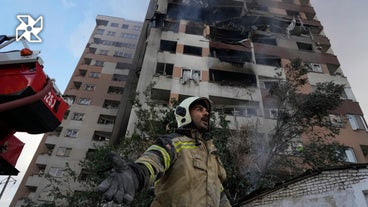
Israel-Iran Conflict Escalates: Trump Calls for End to Expanding Middle East War as Tensions Soar. With Israel's offensive against Iran entering its third day and expanding, fears grow over US inaction, Iranian retaliation, and potential attacks on American military assets and vital global trade routes. Concerns mount as planned US-Iran nuclear talks are canceled, highlighting dwindling prospects for a deal amidst escalating regional tensions
Amidst escalating Middle East tensions following Israel's offensive against Iran, planned US-Iran nuclear talks are canceled. Despite President Trump's desire for a deal limiting Iran's nuclear program in exchange for sanctions relief, the Israeli assault, contrary to some expectations, has seemingly diminished prospects for a swift agreement. Oman, mediating indirect US-Israeli negotiations, confirmed the talks' cancellation, leading nuclear diplomacy experts to predict dwindling chances of a near-term agreement with Tehran. This development further complicates the already volatile situation
Escalating Israel-Iran Conflict: Amidst Trump's Call for Ceasefire, Israel Intensifies Attacks. Fresh intelligence reveals Israel's escalating campaign against Iran, including attacks on Iranian energy infrastructure, threats against Supreme Leader Ayatollah Ali Khamenei, and pressure on the US for a joint strike on Iran's most sensitive nuclear facility. This aggressive posture comes as the Trump administration struggles to respond, jeopardizing already fragile diplomatic efforts and raising concerns of wider regional conflict
Amid escalating Middle East conflict, an anonymous Arab diplomat warns Israel's offensive against Iran shows no signs of stopping, despite President Trump's call for an end to the fighting. This follows Israeli attacks on Iranian energy infrastructure and increasing tensions in the region
Middle East Crisis: US Allies Seek De-escalation Amidst Israel-Iran Conflict. Saudi Arabia, UAE, Qatar, Jordan, and other US-aligned nations condemn the Israeli offensive. Qatar and Oman, experienced mediators, are leading diplomatic efforts with US coordination, while Saudi Arabia pursues parallel diplomatic channels to de-escalate rising tensions between Israel and Iran
Israel's surprise offensive against Iran, launched Thursday with devastating strikes on military and nuclear sites, has yielded Netanyahu strategic gains. The conflict has overshadowed the planned Israeli-Palestinian peace conference, stalled US-Iran nuclear talks, and highlighted Israel's intelligence capabilities, potentially emboldening Iranian opposition. This escalation risks wider Middle East conflict and jeopardizes crucial global trade routes
Amidst escalating Middle East tensions, a diplomat's question hangs heavy: "Why stop now?" Israel's intensified attacks on Iran, despite Trump's call for an end to the conflict, raise concerns about a wider war and jeopardizing US-Iran nuclear talks. The escalating violence and cancelled negotiations highlight the growing risk of regional instability and potential attacks on American assets
Israel-Iran Conflict Escalates: Civilian Casualties Rise Amidst Fears of Uncontrolled Retaliation. Israeli strikes on Tehran and Iranian missile attacks on Israeli cities have resulted in at least 80 Iranian and seven Israeli deaths, including children. Analysts warn of a dangerous cycle of escalating violence and vengeance, jeopardizing regional stability and potentially impacting global trade routes
The U.S.'s neutral stance on the escalating Israel-Iran conflict is deeply concerning, jeopardizing regional stability and potentially impacting global trade routes. This inaction, despite Israel's aggressive attacks on Iranian infrastructure, raises questions about America's role as Israel's chief military and diplomatic backer and the future of nuclear negotiations
Escalating Middle East conflict risks wider war, jeopardizing US troops in Iraq and the Persian Gulf. Unintended escalation could spark regional tit-for-tat violence, targeting vital waterways and American military assets. Experts fear the expanding conflict will derail US-Iran nuclear talks and further destabilize the region
US military bases in the Middle East are on high alert amid escalating Israeli-Iranian conflict. A former US official warns the administration bears responsibility for the safety of American personnel and assets should they be targeted by Iranian missiles, drones, or other attacks, emphasizing that blame cannot solely rest with either Israel or Iran
Trump's "peace through strength" approach faces a critical test as the escalating Middle East conflict shows limited US intervention. Despite the President's call to end the Israel-Iran war, the expanding conflict and cancelled US-Iran talks raise concerns about America's ability to de-escalate tensions and prevent further regional instability. Experts question the effectiveness of the current strategy and the potential for a wider military confrontation
Iran Nuclear Deal Prospects Dim Amidst Israeli-Iranian Conflict: Expert Analysis
International Crisis Group researcher Ali Vaez casts doubt on the likelihood of a Trump-era Iran nuclear deal, citing the escalating conflict between Israel and Iran. The current Middle East crisis significantly reduces the chances of a near-term agreement to limit Iran's nuclear program in exchange for sanctions relief
Trump initially rejected Netanyahu's call for an Iranian attack, favoring diplomacy spearheaded by his associate Steve Witkoff. However, with diplomatic efforts failing, Trump and Witkoff likely believed that weakening Iran's nuclear capabilities through military action would pressure Tehran into accepting stricter nuclear deal terms, including dismantling its uranium enrichment capacity
Iran-US nuclear talks collapse amid escalating Middle East conflict. Following Israel's attacks on Iran, deepening mistrust and Iran's refusal to negotiate from a position of weakness have shut the door on diplomacy. Experts fear dwindling chances of a nuclear deal under the Trump administration
The president also abandoned the previous Iran nuclear deal in 2018, driving the current dilemma by ending international limits on Iranian nuclear development and bringing it closer to being able to build a weapon — the factor Israel has cited to justify its attack. (Iran denies that it intends to build nuclear bombs.)
Kazem Gharibabadi, Iran’s deputy foreign minister, said in a Saturday interview that his country will downgrade its already limited cooperation with the International Atomic Energy Agency, a global watchdog.
While some foreign policy hawks in Israel and the U.S. claim the ongoing Israeli attack will aid Trump’s dealmaking, Vaez said Tehran will refuse to negotiate on the issue while it is under fire.
Even once the current round of fighting concludes, renewing diplomacy will take time. If the war ends with “a draw, the Iranians have to regain some leverage,” including potentially by abandoning one of the remaining limits on their nuclear program, their membership of the international nonproliferation treaty, Vaez said. If Iran faces a major military defeat, with its nuclear program shattered, Tehran would see no benefit in an agreement Trump could promote, since it would not be able to win incentives from the U.S., he continued.
Eliminating Iranian capabilities and even scientists is unlikely to decimate the decades-long institutional knowledge in the country, while bolstering voices in Iran who say it must focus on gaining a nuclear deterrent.
“The only situation in which Iran returns to talks now is if the U.S. keeps Israel checked and makes significant concessions to Iran on its program. Even then, it’s hard to overcome the lesson learnt that if they had a weapon this wouldn’t have happened,” Dina Esfandiary, the Middle East lead at Bloomberg Geoeconomics, wrote on X.
Trump must negotiate a path forward amid disagreements with Israel and among his own staff members.
The president could “push for restraint at this stage,” telling Netanyahu to claim victory rather than continue a prolonged, bloody war for likely unachievable objectives akin to the Gaza conflict, the former U.S. official said, adding, “You can say you got your pound of flesh but you’re going to be better than [President Joe] Biden: you’re not going to let the Israelis do stupid shit.”
A notable faction of conservatives believes the president should see the Israeli leader is pursuing a goal beyond a settlement and reject the idea of U.S. intervention or providing major additional jets and bombs.
“It’s beginning to look like regime change is the goal,” Reid Smith, the vice president of foreign policy at Stand Together, an organization founded by the right-wing billionaire Charles Koch, told HuffPost.
Internally, some Trump personnel are “urging restraint and prioritization. They are understandably allergic to being drawn into another war of uncertain dimension in the Middle East when strategic emphasis should reorient attention to the Indo-Pacific and the Western Hemisphere,” Smith continued. Depending on how those debates go, “Israel will have to calibrate its expectations… based on what the U.S. is willing to provide.”
More bellicose officials, Republican lawmakers and donors and anti-Iran pundits are cheering on the Israeli attack, however. And they appear eager to use the moment to push back against Trump-aligned figures who seek less U.S. intervention in the Middle East — like Elbridge Colby, a senior official at the Pentagon, according to a Saturday night report in Semafor. Hawkish commentators have highlighted an interview Trump gave The Atlantic on Saturday in which he rejected criticism from Iran war skeptics like Tucker Carlson that he was abandoning his “America First” motto by permitting Netanyahu’s offensive.
For two decades, HuffPost has been fearless, unflinching, and relentless in pursuit of the truth. to keep us around for the next 20 — we can’t do this without you.
We remain committed to providing you with the unflinching, fact-based journalism everyone deserves.
Thank you again for your support along the way. We’re truly grateful for readers like you! Your initial support helped get us here and bolstered our newsroom, which kept us strong during uncertain times. Now as we continue, we need your help more than ever. .
We remain committed to providing you with the unflinching, fact-based journalism everyone deserves.
Thank you again for your support along the way. We’re truly grateful for readers like you! Your initial support helped get us here and bolstered our newsroom, which kept us strong during uncertain times. Now as we continue, we need your help more than ever. .
Already contributed? Log in to hide these messages.
For two decades, HuffPost has been fearless, unflinching, and relentless in pursuit of the truth. to keep us around for the next 20 — we can’t do this without you.
Already contributed? Log in to hide these messages.
Given the president’s unpredictable nature, Vaez said his ultimate choice on whether to restrain Israel could be shaped by pressure from MAGA figures to conversations with Arab leaders to whom Trump has personal and financial ties, like the ruler of Qatar, whose joint gas field with Iran was hit by Israel on Saturday.
For now, he anticipates the situation to “escalate further and get worse.”
Source: Original Article