
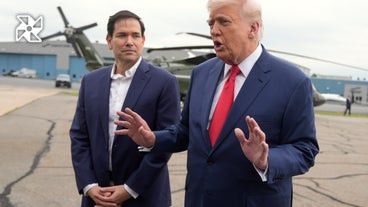
Trump Administration Distances US from Israeli Strikes on Iran, Jeopardizing Nuclear Deal Talks. Secretary of State Rubio confirmed the US was uninvolved in the unilateral Israeli attacks, prioritizing American safety amidst escalating Middle East tensions and Iran's nuclear program violations
Israel launched airstrikes targeting Iranian nuclear facilities, aiming to prevent Tehran's nuclear weapons development. This action occurred as the Trump administration prepared for crucial sixth-round talks regarding Iran's expanding uranium enrichment program, raising significant tensions in the Middle East and jeopardizing ongoing nuclear negotiations
Trump Administration Distances US from Israeli Strikes on Iran. Secretary of State and National Security Advisor Marco Rubio confirmed the US was not involved in Israel's unilateral attacks on Iranian nuclear targets, despite prior knowledge. The strikes, aimed at preventing Iran's nuclear weapons development, heighten tensions surrounding ongoing nuclear deal negotiations
Secretary of State Rubio clarifies US non-involvement in Israeli strikes on Iranian nuclear facilities, prioritizing the safety of American personnel in the region. While acknowledging Israel's preemptive action as a matter of self-defense, the statement emphasizes the unilateral nature of the attack and underscores the Trump administration's commitment to de-escalation and diplomatic solutions to the Iran nuclear crisis
Hours before Israeli strikes on Iranian nuclear targets, President Trump advocated for a diplomatic solution while acknowledging the possibility of US military action. Iran maintains its nuclear program is peaceful, yet the IAEA recently declared Iran in violation of its non-proliferation commitments for the first time in two decades, escalating Middle East tensions and complicating ongoing US-Iran nuclear talks
Following US personnel evacuations from the Middle East amid rising tensions, Secretary of State Marco Rubio issued a strong warning to Iran: No attacks on US interests or personnel will be tolerated. This firm statement comes after Israel's unilateral strikes on Iranian nuclear facilities
Secretary of State Rubio's statement on the Israeli strikes against Iran omitted crucial support for Israel in the event of retaliation, a notable departure from previous U.S. policy. The lack of explicit U.S. backing for Israel amid potential Iranian counterattacks raises questions about the Trump administration's Middle East strategy and its commitment to its key ally
Trump-Netanyahu Tensions Rise Amid Iran Deal & Gaza Conflict: The President's pursuit of a nuclear deal with Iran and increased food aid to Gaza clashes with Israeli Prime Minister Netanyahu's policies, creating growing friction between the two leaders
Trump-Netanyahu Iran Talks Hint at Imminent Israeli Attack: Following Monday's phone call between Trump and Netanyahu focusing on Iran, Trump's Thursday comments suggested an impending Israeli strike on Iranian nuclear facilities. This raises concerns about escalating Middle East tensions and the future of US-Iran nuclear negotiations
Trump administration distances US from Israeli strikes on Iran, demanding tougher negotiations with Tehran to secure a nuclear deal. Secretary of State Rubio emphasizes the unilateral nature of the Israeli action while prioritizing the safety of American personnel. He warns Iran against targeting US interests, signaling a need for increased concessions from Tehran to de-escalate tensions and achieve a peaceful resolution
US Troops and Diplomats at Risk Amidst Iran-Israel Tensions: Retaliation for Israeli strikes on Iranian nuclear facilities could endanger American personnel in the Middle East, highlighting the complex US relationship with both Israel and Iran. The situation underscores the precarious balance in the region and the potential for escalating conflict
Following Trump's Wednesday announcement of U.S. personnel relocation from the Middle East due to heightened security risks and his vow to prevent Iran from acquiring nuclear weapons, concerns over escalating tensions in the region have surged. This comes amidst Israeli strikes on Iranian nuclear targets and ongoing negotiations regarding Iran's nuclear program
US-Iran nuclear talks resume Sunday in Oman, with U.S. Special Envoy Steve Witkoff and Iranian Foreign Minister Abbas Araqchi meeting for a sixth round of discussions following recent Israeli strikes on Iranian nuclear facilities
HuffPost: 20 Years of Unwavering Truth. Support independent journalism. Your contribution keeps our fearless reporting alive for the next 20 years
Unwavering commitment to factual reporting: delivering the news you deserve
Thank you again for your support along the way. We’re truly grateful for readers like you! Your initial support helped get us here and bolstered our newsroom, which kept us strong during uncertain times. Now as we continue, we need your help more than ever. .
We remain committed to providing you with the unflinching, fact-based journalism everyone deserves.
Thank you again for your support along the way. We’re truly grateful for readers like you! Your initial support helped get us here and bolstered our newsroom, which kept us strong during uncertain times. Now as we continue, we need your help more than ever. .
Already contributed? Log in to hide these messages.
For two decades, HuffPost has been fearless, unflinching, and relentless in pursuit of the truth. to keep us around for the next 20 — we can’t do this without you.
Already contributed? Log in to hide these messages.
Whether that meeting will take place is now unclear. A Witkoff spokesperson did not immediately respond to a query.
(Reporting By Steve Holland; Editing by Don Durfee and William Mallard)
Source: Original Article