
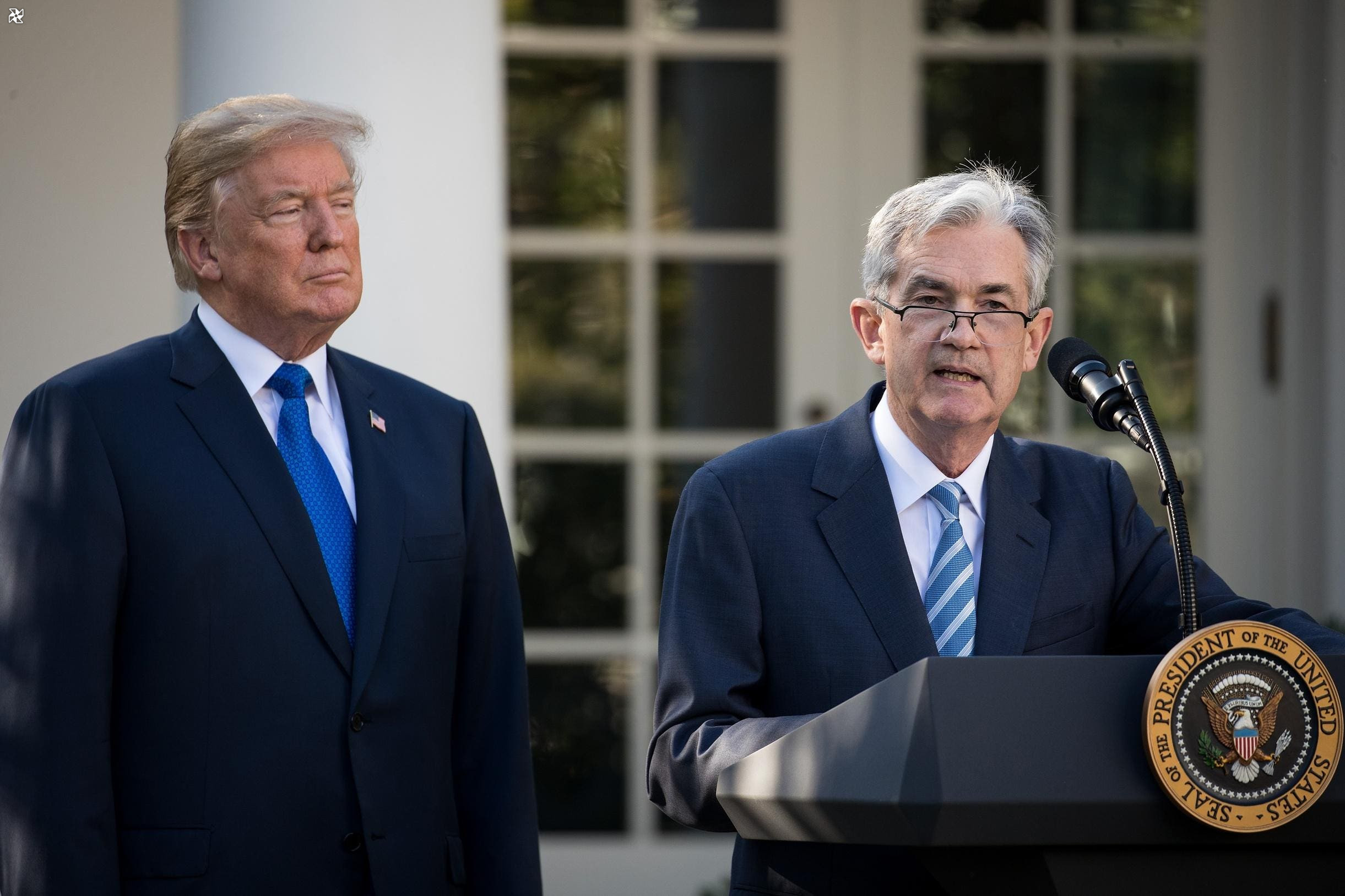
President Donald Trump name called Federal Reserve Chairman Jerome Powell for declining to lower interest rates, as Trump has continuously demanded, in the latest White House criticism of the historically operationally independent central bank and its top-ranking official, a Trump appointee.
Trump's attacks on Federal Reserve Chairman Jerome Powell: A history of criticism. Since appointing Powell, President Trump has repeatedly condemned the Fed Chair, even resorting to name-calling, demanding aggressive interest rate cuts despite the Fed's operational independence. This escalating conflict highlights Trump's ongoing pressure campaign against Powell and the central bank
Trump derided Powell as a “numbskull” in a lengthy tangent Thursday morning, in which Trump called himself a “genius,” urging rate cuts.
“I may have to force something” on rates, said Trump, upping the pressure on his campaign against Powell, who is just one of 12 voters on the Fed’s rate-setting committee.
Trump’s comments come amid a two-day blitz against the Fed and Powell, as Vice President JD Vance posted to the X social media platform Wednesday morning that “the refusal by the Fed to cut rates is monetary malpractice.”
Vance’s critique came immediately after the Bureau of Labor Statistics released May’s consumer price index inflation report, which revealed less price increases than economists anticipated.
Trump slams Fed Chair Powell, demanding a drastic 1% interest rate cut. This aggressive call follows tame inflation data and escalating White House pressure on the Federal Reserve, echoing previous threats of firing Powell. The President's criticism includes personal attacks and claims that lower rates would reduce the national debt, despite economic realities
Trump slams Fed Chair Powell, claiming lower interest rates would drastically reduce US national debt. This assertion, however, misrepresents the relationship between Treasury bond yields (set by market investors) and the Federal Reserve's interest rate policies. The President's call for aggressive rate cuts ignores the complexities of US debt financing and the Fed's independent role
Trump Defends Powell Despite Rate Cut Demands: "I'm not going to fire him," the president said, despite calling the Fed Chair a "numbskull" for resisting aggressive interest rate cuts. This follows Trump's continued criticism of the Federal Reserve and Powell's refusal to lower rates, even amid easing inflation
Next week's Fed rate cut probability sits at a mere 3%, according to CME Group's FedWatch Tool. This low probability reflects the market's assessment of derivatives contracts tied to Federal Reserve policy
To the White House’s point, recent economic data does approach the conditions normally preceding interest rate cuts, which typically happen when the labor market exhibits signs of weakness as inflation is tolerable. Core CPI inflation, which excludes more volatile food and energy prices, was 2.8% in May, nearly four percentage points its 2022 apex. Hiring has slowed considerably to start this year, as the 127,000 average jobs added during 2025’s first five months is much lower than the 180,000 during last year’s comparable stretch. However, Powell and other Fed staff have expressed the need for more caution policy changes than normal given the unknown effect of Trump’s tariffs. Experts largely agree tariffs will result in significantly higher inflation, and Goldman Sachs economists predict core CPI will climb to 3.5% by December, well above policymakers’ long held 2% target.
After slashing rates to near zero in 2020 to stimulate the economy during the COVID-19 slowdown, the Fed hiked rates to their highest level in 23 years by 2023 in response to surging inflation. The Fed lowered rates from the 5.25% to 5.5% target range to the current 4.25% to 4.5% range from September to December 2024, but has kept rates firm as it takes a wait-and-see approach on the Trump economy. Lower rates are politically popular as they support economic growth via lower costs on all forms of borrowing, from mortgages to business loans. Trump appointed Powell to his post during his first Oval Office stint, but quickly soured on the banker, whose term as Fed boss will expire next May.
Source: Original Article