
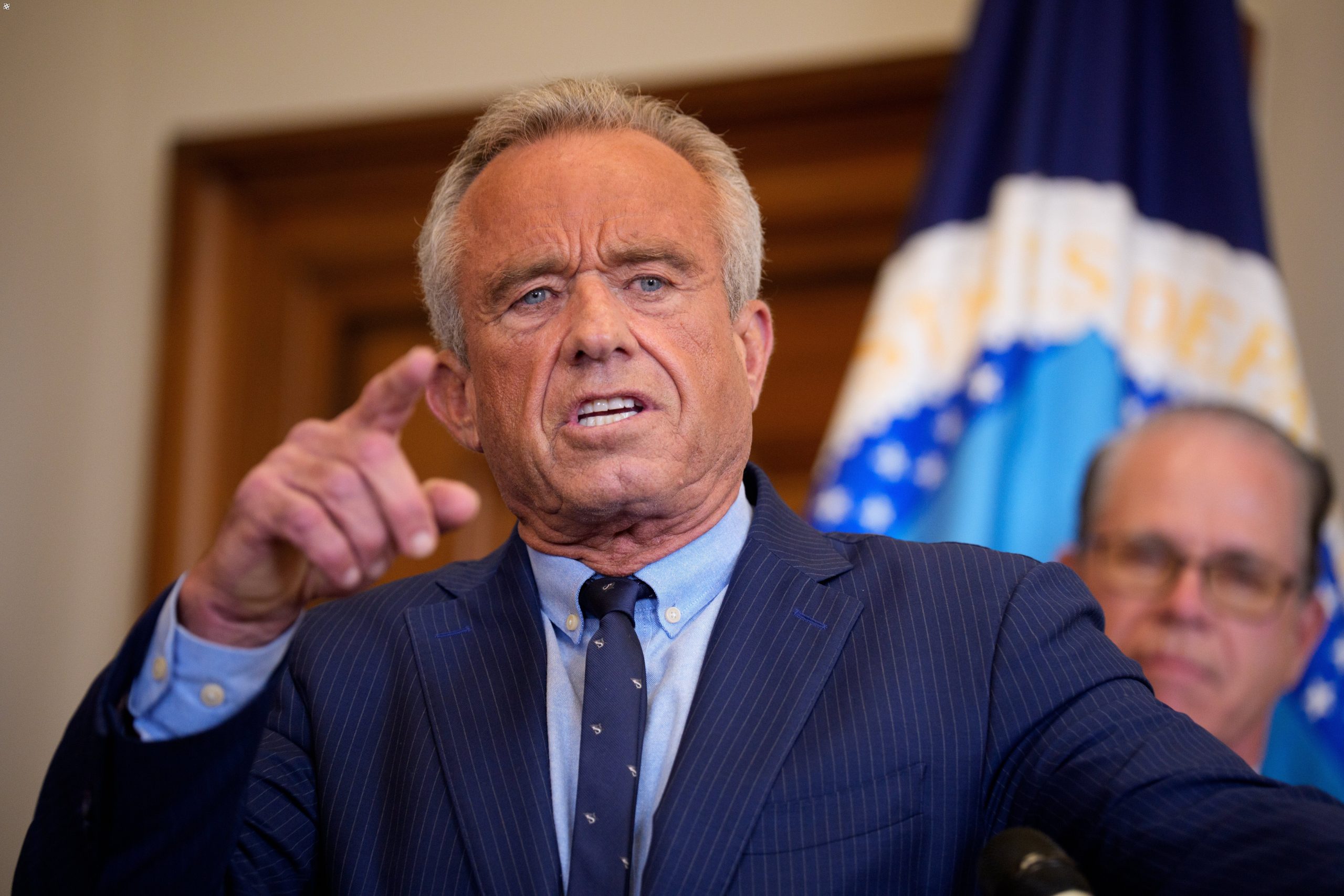
Health Secretary Robert F. Kennedy Jr. appoints eight new vaccine advisors, replacing a dismissed panel. The controversial decision follows criticism from health organizations and includes appointees with views questioning established vaccine policies and pandemic responses. The new advisory committee members represent diverse backgrounds, sparking debate about the future direction of U.S. vaccination recommendations
Robert F. Kennedy Jr. names controversial vaccine advisors, including a prominent mRNA vaccine researcher and critic of COVID-19 vaccines and pandemic lockdowns, alongside a professor of operations management. The new advisory panel sparks concern among health organizations
Robert F. Kennedy Jr.'s dismissal of the 17-member Advisory Committee on Immunization Practices (ACIP) and appointment of eight new vaccine policy advisors sparked widespread outrage. Doctors' groups and public health organizations criticized the move, fearing a shift towards reassessing—and potentially eliminating—established vaccination recommendations. Concerns center on the new appointees' affiliations with groups promoting vaccine misinformation and their history of disseminating unproven claims about vaccine safety and efficacy
Health Secretary Robert F. Kennedy Jr. appoints eight new vaccine advisers, replacing the dismissed ACIP panel. The new appointees include scientists and experts, some with controversial views on vaccines and pandemic policies, sparking concerns among public health organizations. Kennedy stated his intention to select "credentialed scientists," not anti-vaxxers, but the choices include individuals with histories of promoting vaccine misinformation and conspiracy theories. This decision follows widespread criticism of Kennedy's abrupt dismissal of the previous advisory committee
Robert F. Kennedy Jr.'s new vaccine advisory panel includes Vicky Pebsworth, a National Association of Catholic Nurses regional director and board member of the National Vaccine Information Center (NVIC), an organization known for disseminating vaccine misinformation
Dr. Robert Malone, a former mRNA researcher and prominent conservative figure, joins Robert F. Kennedy Jr.'s new vaccine advisory panel. Known for his popular blog and wellness institute, Malone gained notoriety during the COVID-19 pandemic for disseminating conspiracy theories about the virus and vaccines, promoting unproven treatments on podcasts and conservative media outlets, and downplaying the severity of the measles outbreak. His views on COVID-19 vaccines and alternative medicine have drawn significant criticism
Robert F. Kennedy Jr.'s new vaccine advisors include controversial figures like Dr. Robert Malone, who has spread misinformation about COVID-19 vaccines, claiming millions were hypnotized into taking them and suggesting they cause AIDS. Malone also downplayed deaths during a major U.S. measles outbreak, promoting unproven treatments and conspiracy theories on conservative media outlets. These appointments raise concerns about the future direction of U.S. vaccine policy
Robert F. Kennedy Jr.'s new vaccine advisory panel includes prominent figures like Dr. Martin Kulldorff, a biostatistician and epidemiologist known for co-authoring the Great Barrington Declaration, and Dr. Cody Meissner, a former ACIP member. These appointments, alongside other experts, follow the Secretary's dismissal of the previous advisory committee
Health Secretary Robert F. Kennedy Jr. announced eight new vaccine policy advisors on Wednesday via social media, replacing the previously dismissed Advisory Committee on Immunization Practices (ACIP) panel. The new appointees include prominent figures known for their views on vaccine policy and pandemic response
Since 1964, the Advisory Committee on Immunization Practices (ACIP) has guided U.S. vaccine policy. The ACIP provides crucial recommendations to the CDC Director on FDA-approved vaccine usage, shaping vaccination programs nationwide and influencing doctor recommendations
The other appointees are:
Dr. James Hibbeln, a leading expert in nutritional neurosciences and former head of a National Institutes of Health (NIH) group, studies the impact of nutrition on brain development. His research focuses on the potential neurological benefits of seafood consumption during pregnancy
MIT Professor Retsef Levi, an expert in operations management, joins the newly formed vaccine advisory panel
Dr. James Pagano, Los Angeles emergency medicine physician
Dr. Michael Ross, OBGYN, practices in Virginia
Among Robert F. Kennedy Jr.'s eight new vaccine policy advisors is Dr. Meissner, a Dartmouth-Hitchcock Medical Center expert in pediatric infectious diseases with extensive experience advising both the Advisory Committee on Immunization Practices (ACIP) and the FDA's vaccine advisory panel
During his five-year term as an FDA adviser, the committee was repeatedly asked to review and vote on the safety and effectiveness of COVID-19 vaccines that were rapidly developed to fight the pandemic. In September 2021, he joined the majority of panelists who voted against a plan from the Biden administration to offer an extra vaccine dose to all American adults. The panel instead recommended that the extra shot should be limited to seniors and those at higher risk of the disease.
Ultimately, the FDA disregarded the panel’s recommendation and OK’d an extra vaccine dose for all adults.
In addition to serving on government panels, Meissner has helped author policy statements and vaccinations schedules for the American Academy of Pediatrics.
ACIP members typically serve in staggered four-year terms, although several appointments were delayed during the Biden administration before positions were filled last year. The voting members all have scientific or clinical expertise in immunization, except for one “consumer representative” who can bring perspective on community and social facets of vaccine programs.
Kennedy, a leading voice in the anti-vaccine movement before becoming the U.S. government’s top health official, has accused the committee of being too closely aligned with vaccine manufacturers and of rubber-stamping vaccines. ACIP policies require members to state past collaborations with vaccine companies and to recuse themselves from votes in which they had a conflict of interest, but Kennedy has dismissed those safeguards as weak.
Most of the people who best understand vaccines are those who have researched them, which usually requires some degree of collaboration with the companies that develop and sell them, said Jason Schwartz, a Yale University health policy researcher.
“If you are to exclude any reputable, respected vaccine expert who has ever engaged even in a limited way with the vaccine industry, you’re likely to have a very small pool of folks to draw from,” Schwartz said.
The U.S. Senate confirmed Kennedy in February after he promised he would not change the vaccination schedule. But less than a week later, he vowed to investigate childhood vaccines that prevent measles, polio and other dangerous diseases.
Kennedy has ignored some of the recommendations ACIP voted for in April, including the endorsement of a new combination shot that protects against five strains of meningococcal bacteria and the expansion of vaccinations against RSV.
In late May, Kennedy disregarded the committee and announced the government would change the recommendation for children and pregnant women to get COVID-19 shots.
On Monday, Kennedy ousted all 17 members of the ACIP, saying he would appoint a new group before the next scheduled meeting in late June. The agenda for that meeting has not yet been posted, but a recent federal notice said votes are expected on vaccinations against flu, COVID-19, HPV, RSV and meningococcal bacteria.
A HHS spokesman did not respond to a question about whether there would be only eight ACIP members, or whether more will be named later.
___
Associated Press reporters Matthew Perrone, Amanda Seitz, Devi Shastri and Laura Ungar contributed to this report.
___
The Associated Press Health and Science Department receives support from the Howard Hughes Medical Institute’s Science and Educational Media Group and the Robert Wood Johnson Foundation. The AP is solely responsible for all content.
Source: Original Article